
BIS Certification
Bureau of Indian Standards

What is BIS Certification for selling in India
It is a mandatory certificate required for the import of various categories of products, as it certifies compliance with the Indian quality and safety standards established by the Bureau of Indian Standards (BIS).
The Bureau of Indian Standards is the national certification body in India, established in 1986 under the Ministry of Consumer Affairs, Food and Public Distribution.
Octagona can support you during all the steps for obtaining certification. Find out how by downloading the whitepaper:
Why certify?
Unlock the Indian market potential: our local team supports you at every stage of the BIS certification process to ensure compliance, quality and competitive advantage. With 1.4 billion consumers and a rapidly expanding economy, India presents a unique opportunity to grow your business. Rely on our expert advice and transform the’regulatory compliance in a engine of international success.
From 16/09/2025, the certification process is included in the expenditures eligible for subsidy by the new SIMEST AWARD
Certification schemes
ISI Mark Scheme
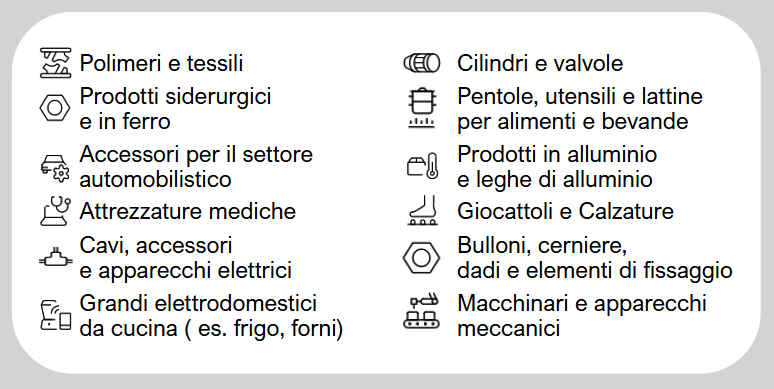
Mark of compliance for a series of industrial and consumer products. It provides for a’inspection at the production site of the product and is issued by the Foreign Manufacturers Certification Department (FMCD). This certification attests to the compliance to the regulations established by the certification scheme for the foreign manufacturers (FMCS). All products that comply with the standards FMCS are marked with the ISI logo, also known as the “BIS Standard Mark” or “ISI Mark” in accordance with ISI Mark. Scheme I.
CRS registration scheme
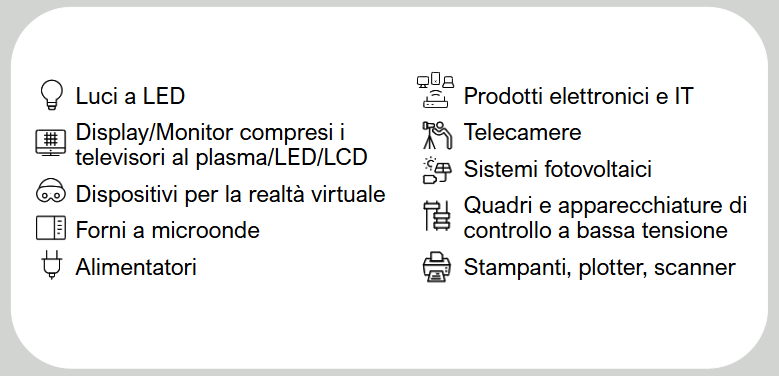
Registration under the CRS (Compulsory Registration Scheme) was introduced in 2012 for 15 product categories.
It mainly concerns the IT category products, electronics and lighting, however, the list of products subject to to registration is constantly being expanded. This makes the BIS-CRS registration one of the most important and common in India.
Scheme IV with CoC
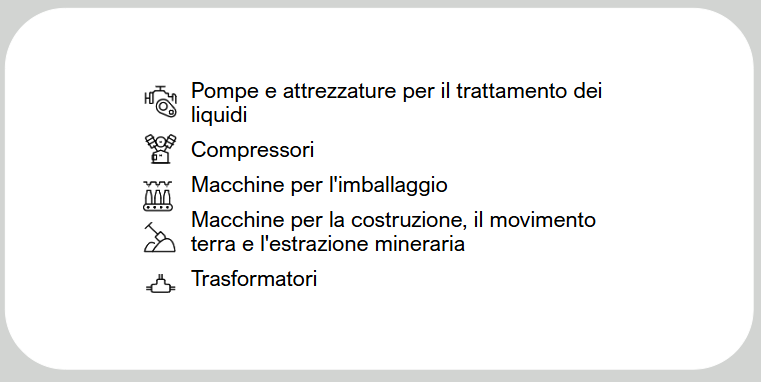
Certificate of conformity for products subject to Quality Control Order (QCO), such as transformer components, steel pipes. It provides for an initial factory inspection and spot checks during production, and is issued by BIS or laboratories and certification bodies accredited by it. This CoC certifies that each production batch meets QCO quality and safety regulatory requirements, and each batch shipped to India must be accompanied by the relevant batch-wise certificate.
Outline Brand X
The Indian government has published the official notification confirming the cancellation of Scheme X – OTR effective from 01/16/2026.
Registration procedure

How we support you
Thanks to the collaboration between our Italian and Indian teams, we are able to Accompany you throughout the path to certification: from requirements analysis to paperwork management to the final marking of your product.
Our team

Monica Sessi

Anshul Sharma

Kunal Singh
Our locations in India

New Delhi
New Delhi 11007

Pune

Bangalore
Bangalore, Karnataka 560052
FAQ - Frequently Asked Questions
We have collected some of the questions We receive most often:
What is a Quality Control Order (QCO) and what implications does it have for machinery manufacturers subject to mandatory certification in India?
It is a decree issued by the Indian government that Makes it mandatory for specific products to comply with Indian Standards, regulated by the Bureau of Indian Standards (BIS). It thus transforms the BIS marking for listed goods from voluntary to mandatory, requiring:- Compliance testing in NABL accredited laboratories;
- Factory Inspection to verify that production follows the stated requirements;
- Mandatory marking of the ISI logo and certificate number on the product.
Which timelines medium and costs are to be considered from the time of application until the certificate is obtained?
Taking into consideration the preparation of documentation, application submission and acceptance, the conduct of final laboratory testing, and any factory inspection, obtaining certification is done by 6 to 8 months.Indicative costs vary based on the commodity category requiring laboratory testing, factory inspection BIS fees, and consulting costs.
What is the’methodological procedure of BIS certification for capital goods and what are the most critical steps?
- Choosing the appropriate IS standard- Technical dossier preparation
- Sending samples to laboratories
- Submission of application
- File acceptance and FIR fixation
- Factory Inspection (FIR)
- Issuance of the BIS certificate
- Post-market surveillance, renewals
The most critical steps are proper selection of the standard, completeness of the technical dossier, and preparation for factory inspection (FIR), where deficiencies in records or quality control can cause delays or rejections.
What are the main consequences (operational and legal) For a company that does not meet the BIS/QCO requirement when importing or manufacturing on site?
- Significant fines under the BIS Act, 2016 (up to several tens of thousands of euros);- Seizure or rejection at customs of lots imported without a valid BIS license;
- Ban on sales and potential product recalls from the market;
- Reputational damage with distributors and end customers;
Criminal liability in case of accidents related to safety non-compliance.
In addition, repeated violation can lead to suspension or outright withdrawal of the BIS license, with lasting impacts on the ability to operate in India
Who Relocates production to India of its machinery (keeping the identical design) is still subject to BIS certification?
Yes, because certification is granted to a specific production unit. If production is moved to another unit, even within the same company, a separate certification must be obtained for the new location.The required documentation Can it be produced directly by the company or is a third-party certifying agency needed?
The necessary documentation must be provided directly from the producers.A manufacturer that produces contract machines Should you apply for a license or CoC?
A Certificate of Conformity (CoC) is recommended for batch production if manufacturers make the entire quantity in a single round and ship it in the following months or years.The customs Does it require proof of BIS licensure to issue the AED?
Yes, Customs usually requires proof of a valid BIS license to issue the Advance Electronic Declaration (AED).In case of technical modification (software upgrade, security component replacement) on a machine already certified, do we need to update the BIS certification or repeat the whole procedure?
It is sufficient to notify the BIS changes made to the entire process-which affect the product, production process, raw materials or components-and wait for BIS to issue further guidance.
BIS Certification agreement signed with FederlegnoArredo
Octagona is pleased to announce the signing of a new agreement with FederlegnoArredo, the federation of wood, cork, furniture, lighting and furnishings industries. The agreement provides dedicated support for member companies to achieve the BIS Certification (Bureau of Indian Standards), an essential requirement for exporting products to India.
Ensure the safe entry of your product into India
Don't risk customs blocks: Start the BIS certification process now.
Fill out the form with your contact information and download the full whitepaper to learn more about obtaining certification quickly and without errors.
 Italian
  English