EU-Mercosur agreement: risks, opportunities and strategic implications for Italian SMEs in 2026
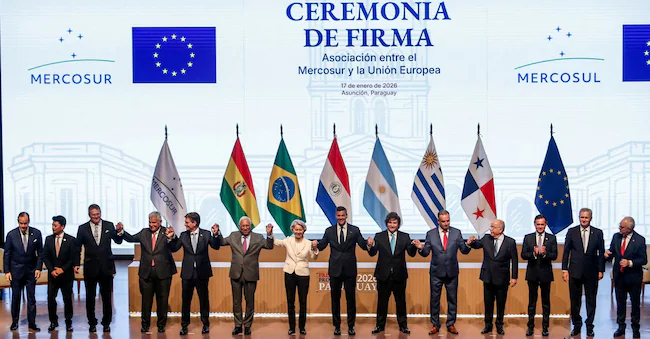
January 2026 marked a historic turning point in trade relations between Europe and Latin America: European Union and Mercosur formally signed a Trade Association Agreement after more than 25 years of negotiations during an official ceremony in Asunción, Paraguay.
The negotiated understanding between the two blocs, involving over 720 million consumers and an estimated GDP of more than $22 trillion (about 25% of global GDP), is conceived as one of the world's largest free trade zones and is destined, once ratified, to profoundly reshape the economic relationship between the EU and South America.
For the Italian SMEs, understanding the characteristics and dynamics of this agreement is crucial for designing internationalization strategies that are competitive, sustainable and consistent with global regulatory and geopolitical developments.
According to official information from the European Commission and external analyses, the text of the agreement includes a number of structural provisions including:
Progressive elimination of duties on more than 90% of goods exchanged between the EU and Mercosur over the course of 10-15 years, with varying timeframes for sensitive and less sensitive sectors.
Significant reduction of non-tariff barriers, simplifying customs procedures, harmonizing technical standards and facilitating access to tenders in Mercosur countries.
Cooperation in trade in services and investment, with the goal of breaking down barriers for the financial, digital, logistics and professional sectors.
Environmental protections and sustainability, including formal commitments to implement the Paris Climate Agreement and specific regulations, such as EU market access only for products from activities not associated with deforestation.
Safeguard clauses for the most vulnerable sectors, allowing the temporary reintroduction of tariffs in case of severe economic impacts.
In addition to purely tariff aspects, the agreement addresses complex disciplines such as. intellectual property, sanitary and phytosanitary regulations, international government procurement e cross-border investments, making it not just a trade treaty but a true framework of integrated economic cooperation.
The role of the European Parliament and the uncertainties over ratification
Although the agreement has been signed, it has not come into effect. To become operational, it is necessary:
Formal approval by the European Parliament.
Ratification by the national parliaments of the 27 EU member states.
Ratification according to the national procedures of Mercosur countries (Argentina, Brazil, Paraguay and Uruguay).
There is also the possibility of a’Provisional application of some sections of the agreement, especially those concerning business cooperation and services, first of full ratification, so as to immediately activate some trade dynamics without waiting for all parliamentary processes to be completed.
Concrete opportunities for Italian SMEs
The EU-Mercosur agreement, if ratified, could generate significant opportunities for Italian SMEs in several areas:
1. Reducing the cost of entering high-potential markets.
The gradual elimination of duties - which today can exceed the 35% for automotive and machinery or the 28% for dairy products. - will significantly reduce the cost of trade with Mercosur economies. This is particularly relevant for industrial sectors such as mechanics, automotive, chemicals, technology and specialized machinery, areas where Made in Italy has a recognized competitive advantage.
2. Expanded access to growth markets
The Mercosur area presents A combined population of more than 700 million consumers and is geared to diversify its trade relations to reduce dependence on markets such as the United States and China. For Italian SMEs, the agreement can translate into:
New export channels for high-end industrial products;
More opportunities for professional, digital and logistics services;
potential increase in foreign direct investment (FDI).
Risks and aspects to be carefully evaluated
Along with the opportunities, the EU-Mercosur Agreement also presents elements of risk that SMEs need to consider carefully:
Political and agricultural opposition in Europe: sectors such as agriculture and livestock have expressed strong concerns about competition from South American products on price and quality standards, with protests in countries such as France, Greece and Poland.
Environmental issues and production standards: Despite clauses designed to ensure compliance with climate commitments, some stakeholders raise doubts about the effectiveness of monitoring mechanisms and enforcement of environmental regulations in Mercosur countries.
Moderate overall economic impact in the short term: international studies indicate that direct macroeconomic benefits may manifest gradually, with modest percentage impacts in the first few years after enactment.
For Italian companies, this means that access to Mercosur markets cannot be improvised, but must be embedded in a solid internationalization strategy, supported by market analysis, regulatory assessments and careful selection of entry models (direct export, local partnerships, commercial or manufacturing presence).
Conclusions: the EU-Mercosur agreement as a strategic lever, if approached methodically
The EU-Mercosur Agreement represents an important Geopolitical redesign of global trade. For Italian SMEs it is potentially a flywheel for exports and for the ’expansion into markets wide-ranging; however, the institutional complexity and multi-year nature of its enactment require a planned approach based on solid expertise.
Rely on a consulting partner who specializes in internationalization - With in-depth knowledge of the mechanisms of multilateral trade agreements and international regulatory dynamics - Is now more crucial than ever. Only through strategic and operational accompaniment based on risk, scenario and regulatory compliance analysis will Italian SMEs be able to transform the EU-Mercosur agreement from potential into real competitive advantage.
SHARE ARTICLE
If you want to learn more about the content of this article
In 2026, the United States is confirmed as the world's leading market in terms of economic size, consumption absorption capacity and attractiveness for...