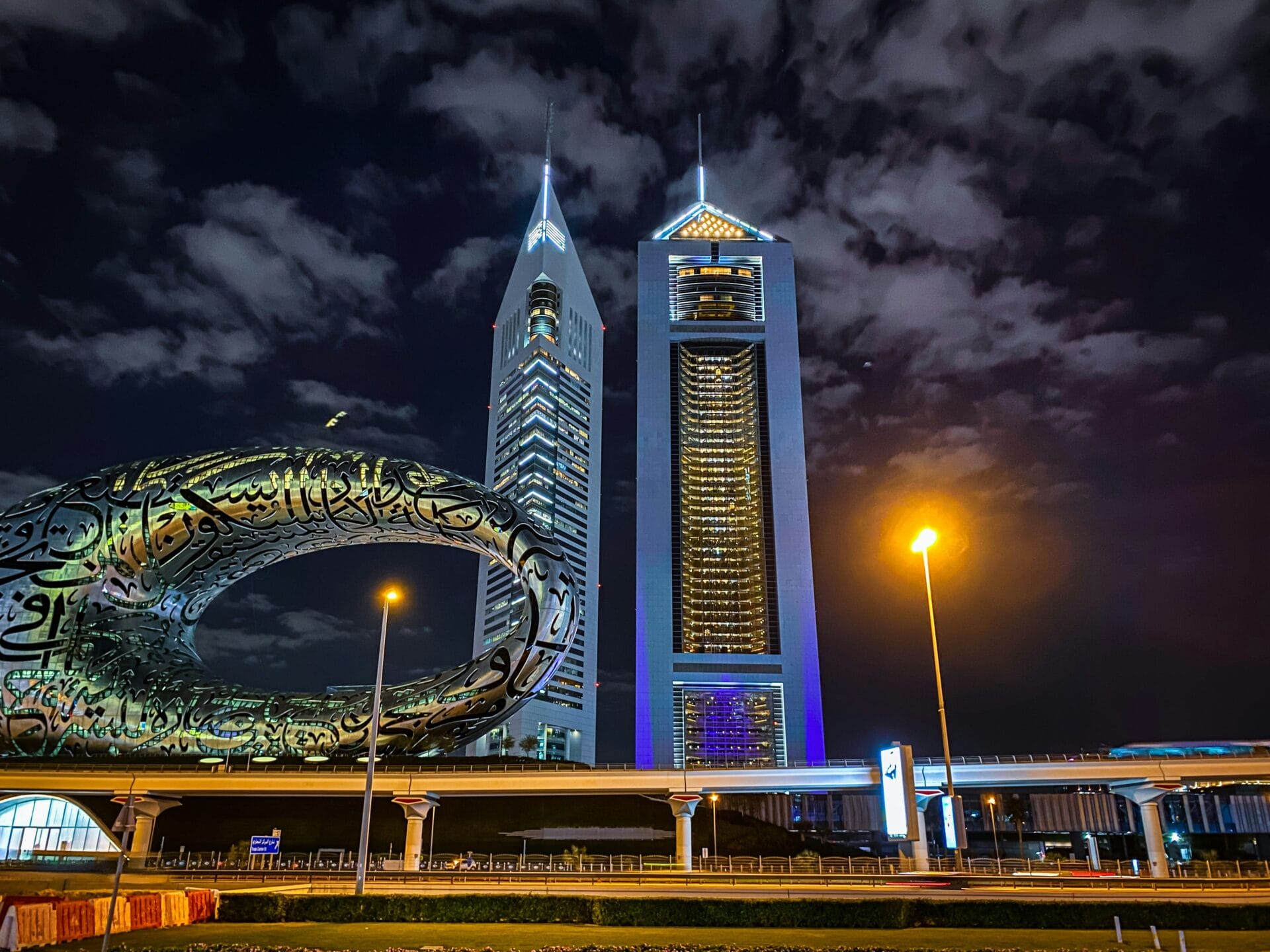
Selling in the United Arab Emirates (UAE) offers Italian companies an attractive prospect for expanding their business in one of the most dynamic and growing areas globally.
In recent years, the rapid reboot of economic activities post-lockdown has stimulated domestic demand, Strengthening the UAE's role as a strategic distribution hub.. Due to the speed of recovery compared to countries with more prolonged restrictions, the UAE has established itself as a crucial hub for markets in the Middle East, East Africa and South Asia. This is made possible by state-of-the-art infrastructure and the presence of 53 Free Trade Zones, which offer significant tax and customs concessions for foreign companies.
The UAE's economic diversification strategy aims to reduce dependence on the oil sector by developing an innovative and competitive business ecosystem. Initiatives such as “Operation 300 Bn” e “Projects of the 50” aim to strengthen the industrial sector, attract international talent and support start-ups, fostering sustainable growth. Foreign investors also benefit from favorable regulations, while export opportunities extend to advanced sectors such as the’sustainable energy, l’artificial intelligence and the’Industry 4.0, often supported by direct investment in local projects
Selling in the Emirates, conditions and opportunities
Trade relations between Italy and the United Arab Emirates show. Particularly positive dynamics in 2025. During the first quarter of the year, Italian sales to this market recorded a significant increase in 49%, standing out in an international context characterized by an overall trade contraction of 0.8%.
This outstanding performance comes from a diversified portfolio of industries that goes beyond the traditional luxury segments. While jewelry and watches maintain their strong position, significant growth is emerging in technologically advanced areas such as precision mechanics, renewable energy technologies, water treatment solutions, and specialized equipment for the oil and natural gas industry.
The Emirates market presents favorable structural characteristics for Italian products, showing a significant trade deficit in the consumer goods segment. In this scenario, Italy is positioned as a third largest supplier after China and India, benefiting from distinctive assets such as quality excellence, production reliability and strong national brand recognition.
Future prospects suggest potential for further expansion through two strategic directions: the identification and development of unexplored specialized market segments, and the strengthening of thepresence ne sectors where Italian supply has already gained established positions.
The commodity areas of greatest interest to Italian exporters
Machinery and equipment
Italian mechanics and industrial technologies make up about 40% of the Italian exports to the United Arab Emirates (UAE), focusing mainly in the oil & gas, water treatment and renewable energy sectors. The Emirati government's commitment to developing a strong local industrial fabric offers new market opportunities, both in traditional manufacturing sectors and those related to Industry 4.0, such as greentech, artificial intelligence, robotics, and blockchain. These areas are helping to modernize the Emirati labor market, reducing employment in low-tech sectors and stimulating demand for innovative machinery.
Food products
The UAE, which imports 87% of its food needs, considers food security a strategic priority. The National Food Security Strategy 2051 and initiatives such as the AgTech Accelerator Program and the Food Valley Platform aim to promote innovative and sustainable agricultural technologies, even in harsh environments. The local food industry, with more than 560 companies, is the third largest in the country, producing 6 million tons of food annually. The Emirati food market is dominated by large supermarket chains and e-commerce platforms, while consumption reflects the growing interest in natural, organic and “free from,” encouraging the export of quality Italian products.
Metal products, excluding machinery and equipment
Jewelry is a pillar of the Emirati economy, accounting for 30% of non-oil exports. With the launch of the ’UAE Good Delivery Standard,“ the government aims to strengthen transparency in the gold and gemstone supply chain, consolidating Dubai's role as a global hub of jewelry processing and trade. While more mature generations buy gold as an investment, younger generations are attracted to design and brands, opening up market space for high-end jewelry, including Italian jewelry.
Pharmaceuticals and medical preparations
The UAE's pharmaceutical sector is booming due to population growth and reduced dependence on drug imports. With an import value of $6.57 billion in 2021, the market benefits from Free Trade Zone as Dubai Healthcare City e Dubai Science Park. The medical industry is buoyed by rising private healthcare spending and the spread of medical tourism, where Dubai excels globally. Future prospects include telemedicine and teleradiology, tools that are growing rapidly due to an aging population and demand for personalized care.
Regulations and incentives
As of June 1, 2021, when the Federal Decree Law 26/2020 , a significant amendment was introduced to the federal legislation regulating private companies in the UAE (Federal Law 2/2015, “Law on Commercial Companies”), which allows foreign individuals and legal entities to wholly own the capital of companies incorporated in the country that operate outside of strategic ri such as telecommunications, finance, and currency printing.
To also boost the attraction and retention of skilled talent from abroad, a reform of the visa system was launched in September 2021, including the introduction of the Green Visa, designed for top professionals, investors, entrepreneurs and students, with the possibility of sponsoring themselves independently without the intermediation of a local employer. With this in mind, the Freelancers Visa, intended for self-employed workers in innovative fields such as artificial intelligence, blockchain and fintech, was also established, and business travel permits were extended from three to six months, accompanied by significant changes to the Golden Visa, reserved for investors and high-profile figures.
UAE tax system for foreign companies
The UAE, while retaining legislative control over some key areas such as defense, foreign affairs, education and health, concedes individual emirates the power to legislate in taxation and other public sectors. The tax system is advantageous for those wishing to sell in the Emirates, as there is no personal income tax and companies are not required to file corporate income tax returns, except for entities involved in natural resource extraction or banking. In addition, there is no corporate income tax for most businesses, and some free trade zones offer long-term tax exemptions. As of 2018, the following was introduced 5 percent VAT%, but some categories of goods and services are exempt or apply a rate of 0%, as in the case of exports and health and educational services. For companies wishing to sell in the Emirates, it is critical to understand the VAT rules and register when sales exceed a certain threshold. VAT obligations are fairly clear, but businesses must be prepared to comply with the regulations to avoid penalties and to qualify for any VAT credits.
For more information on ways and opportunities to expand in the UAE, the team at Octagona, a leader in the internationalization strategies for Italian companies, is at your disposal
SHARE ARTICLE
If you want to learn more about the content of this article
In 2026, the United States is confirmed as the world's leading market in terms of economic size, consumption absorption capacity and attractiveness for...