EU-India Agreement and the Engineering & Machinery Sector: What Changes for Italian Companies
Summary
The EU-India Free Trade Agreement marks a key step for Italian mechanical instrumental and industrial engineering companies, which operate in a context where India is accelerating on the manufacturing, infrastructure and automation fronts. The progressive reduction of tariffs, adjustments on non-tariff barriers and a more predictable regulatory framework open up significant spaces for Made in Italy machinery, plant and componentry, especially in high-tech sectors. At the same time, Indian industrial policies-such as PLI programs-are pushing toward local content, local service and industrial partnership logics, making it necessary for Italian companies to flank simple exports with a structured strategy on channels, service, compliance and technical cooperation. In this scenario, companies that know how to combine proper customs management, competitive positioning, market presidium and medium- to long-term planning will be able to turn the EU-India Agreement into a real and defensible advantage.
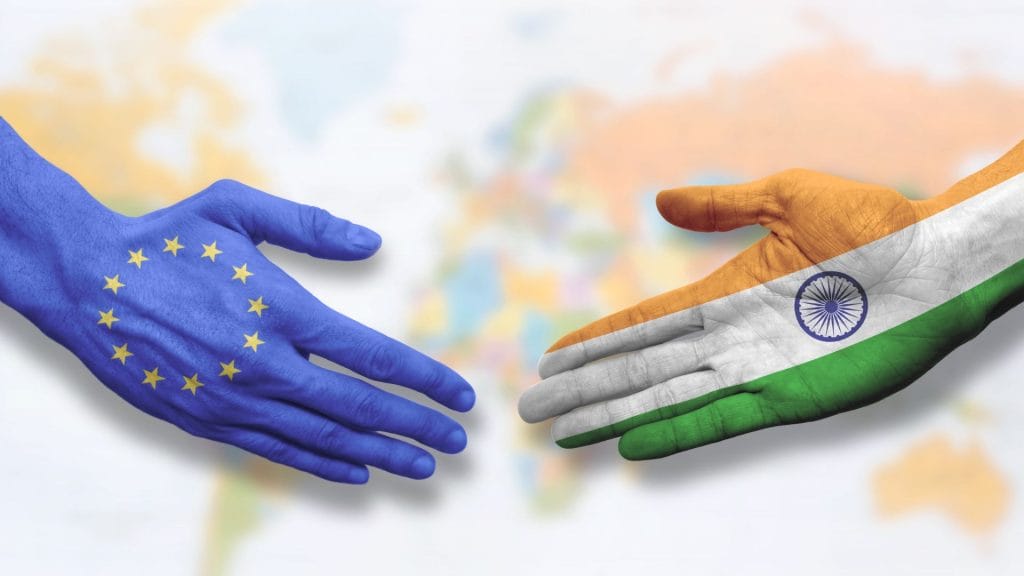
The Signing of the free trade agreement between the European Union and India (EU-India agreement, FTA) opens a new phase. For Italian mechanical instrumental and industrial engineering enterprises, at a time when New Delhi is accelerating the strengthening of its manufacturing and infrastructure base. The agreement aims to significantly reduce tariffs and non-tariff barriers, with an expected impact particularly relevant for high-tech industrial sectors, including machinery, plant engineering and components (Source: EU Commission, EU-India Free Trade Agreement).
The heart of the Free Trade Agreement for industry: lower tariffs and potential savings
For the engineering and machinery sector, the most immediate point is the potential Indian duty relief, which today can be elevated on numerous industrial categories. The European Commission, in accompanying documentation to the agreement, highlights duties “up to” significant levels, including machinery among the categories with high tariffs (Source: EU Commission Representation in Italy, releases on EU-India Agreement).
The same EU communication estimates that the EU-India Agreement could generate savings of up to approx. 4 billion a year in duties on European exports, improving the price competitiveness of many technologies and capital goods. For Italian industrial machinery manufacturers, this potentially means more room for margins or more aggressive pricing policies than international competitors, especially in segments where price remains a key driver of purchasing decisions.
Looking forward, the reduction in tariffs may also encourage the introduction of even more high-tech solutions into India, which today are penalized by the cost differential to local products or products from other competing countries. Higher-performance machines, advanced automation systems, integrated lines and process control solutions may be more affordable for a growing number of Indian end users.
It is important to specify that the benefits of the EU-India Agreement are not automatic. The reduction in duties depends on From the schedule applicable to the specific customs item and by actual compliance with the rules of origin under the arrangement. To access preferential tariffs, companies must therefore carefully verify HS classification, origin requirements and completeness of customs documentation, in coordination with specialized freight forwarders and consultants.
In other words, the competitive advantage derived from the Free Trade Agreement requires rigorous technical management, from proper product qualification to supply contracting, so that the tariff reduction translates concretely into increased competitiveness and better margins in the Indian market. This involves, for example, reviewing export price lists, updating trade terms with distributors and end customers, and establishing internal procedures to systematically oversee customs compliance.
Not just tariffs: a more predictable framework for investment and industrial cooperation
For mechanical engineering companies, the FTA is also relevant because it tends to make the regulatory perimeter of trade and, more generally, of EU-India economic cooperation more stable and readable. In the official profile of the EU-India trade relationship, the Commission reports that trade goods between the EU and India grew by about +90% over the past decade, and that in 2024 the EU was among India's largest trading partners for goods, with about €120 billion interchange (Source: EU Commission fact sheets, EU-India trade relations).
This trend confirms that the Indian market is no longer just a commercial “periphery,” but a Strategic axis in the geography of European export and, in particular, for manufacturers of machinery and engineering solutions. In parallel, India's increasing focus on quality, safety and energy efficiency is leading to progressive alignment-or at least dialogue-between local technical standards and European standards.
In a scenario of growth and integration, opportunities increase for models not limited to “spot” exports, but oriented toward technical partnerships, industrial collaboration agreements, local service and, in appropriate cases, localization (assembly, engineering, spare parts, retrofit). For Italian industrial machinery manufacturers, this translates into the possibility of designing entry paths more structured, combining export, technology transfer and direct presence, including through joint ventures or subsidiaries.
Where demand will focus: automation, machine tools, efficiency
In 2026 the Indian question of capital goods and advanced technologies is strongly related to the’expansion of factory automation, to increasing the quality of production processes, reducing downtime, and enhancing energy efficiency. According to market estimates, the industrial automation market in India has been valued at an order of magnitude around US$15-17 billion in 2024-2025 and is expected to grow to around US$38-41 billion by 2030-2031, with a compound annual growth rate of more than 14% over the 2025-2031 period (Source: BlueWeave Consulting; Verified Market Research).
At the same time, investment in industrial automation and instrumentation systems should Continue to expand at a rapid pace, with expected annual growth around 10-15% in the medium term, supported by the adoption of Industry 4.0 technologies and Indian industrial policies. The industrial robotics component shows a similar trend: from values in the range of a few billion USD in the mid-decade, an estimated Progressive expansion until 2030, with CAGR higher than 13-14%, confirming the demand for advanced process automation solutions.
These numbers indicate how India is investing to increase productivity, quality and manufacturing competitiveness, stimulating a growing demand for reliable industrial technologies, with a focus on service and spare parts availability. For Italian companies in the instrumental mechanics and engineering, this opens up interesting spaces for machine tools, automatic lines, process plants, control systems, energy-saving solutions and digitization of production processes.
An additional element to consider is the strong heterogeneity of the industrial fabric Indian: Alongside large groups that are already highly structured, there is a broad base of companies that are taking their first steps in advanced automation and could find in Italian technologies an ally to make a quantum leap. This makes it necessary to adapt the offer not only in technical terms, but also in terms of packages, services and financeability of the proposed solutions.
PLI and industrial policies: why “local content” also matters for machinery
India's industrial policies are continuing to support domestic manufacturing through instruments such as the PLI incentive programs (Production Linked Incentive), aimed at stimulating productive investments in strategic sectors. According to reports in the business press and industry reports, significant disbursements (disbursements) of the PLI program have been made, spread across multiple sectors (electronics, automotive, pharma, energy, etc.), confirming the government's commitment to strengthening the manufacturing ecosystem.
For European machinery manufacturers, this means that, in many supply chains, Indian customers will tend to favor suppliers who can combine:
technology and performance
availability of local assistance
Flexibility on delivery models (export, installation, training, commissioning)
Possible localization support, including through partnerships or on-site assembly.
Within this framework, the EU-India Agreement can strengthen the position of Italian manufacturers who choose to complement pure exports with a more structured market presidium, aligning with the priorities of “local content” and development of India's industrial base. Companies that are able to present themselves not only as suppliers of machinery, but as partners in industrial development, will be more likely to be involved in long-term projects.
Operational implications for Italian companies: must-haves to capitalize on the Free Trade Agreement
To transform the macroeconomic framework into business results, a number of operational choices become central in 2026.
Customs mapping and preferential origin
It is essential to accurately verify the customs classification (HS Code) of products and the relevant rules of origin in the EU-India Agreement. Only the correct application of preferential origin, accompanied by compliant documentation and Incoterms consistent with the logistics model, allows for the effective benefit of tariff reductions.
Channel strategy and service
In the Indian market, technology alone is not enough. Installation, maintenance, technical training, and parts availability have a major impact on the purchasing decision; a reliable service network often represents a competitive advantage equal to or greater than price. This requires careful consideration of the combination of distributors, agents, service partners and, where sustainable, direct market-preserving facilities.
“Net-of-duty” pricing and TCO
Duty reduction must be integrated into the pricing strategy, preventing the benefit from being dispersed along the supply chain. It is necessary to build price lists consistent with the new pricing scenario and enhance the Total Cost of Ownership (TCO), demonstrating to the customer the overall savings over the life cycle of the product. Arguing about TCO, reliability, energy efficiency, and productivity helps shift the focus from just the initial price to the overall value of the investment.
Compliance and standards
For some product categories, the following remain central technical requirements, certifications and local standards. Preventive compliance management reduces customs delays, regulatory risks, and time to market. Investing in clear technical documentation, English manuals appropriate for the Indian market, and training local partners on compliance becomes an integral part of the entry strategy.
Industrial partnership and cooperation
Finally, the EU-India Agreement encourages. more structured models of collaboration. Evaluating options such as engineering partnerships, local assembly, or parts hubs can strengthen market presence and align with India's industrial policy priorities. In many cases, the combination of technology developed in Italy and adaptation/localization in India represents the optimal trade-off between quality, cost, and end-customer acceptance.
Conclusions: an industrial opportunity, not just a commercial one
The EU-India Free Trade Agreement should be read as an agreement that can substantially affect the competitiveness of European enterprises in India: duty reduction, potential savings estimated in billions of euros, and a more favorable trade framework. For the engineering and machinery sector, however, success will depend above all on the ability to build a credible presidium : compliance, channel, service, pricing and industrial cooperation.
In a market driven by infrastructure and manufacturing investment, preparing in time means arriving ready when the preferential conditions become fully operational and turning the EU-India Agreement into a real competitive advantage for Italian mechanical and engineering companies. With a well-designed strategy, FTA can become not only a short-term business opportunity, but a lever to consolidate long-term industrial relationships with high-potential Indian partners.
SHARE ARTICLESassy Social Share
If you want to learn more about the content of this article





 Italian
  English