Exporting to the U.S.: challenges and strategies to counter tariffs
Summary
L'imposizione di dazi del 10% sugli scambi commerciali tra gli Stati Uniti e vari paesi, inclusa l'Italia, ha avviato una ristrutturazione delle strategie esportative. Le aziende italiane sono invitate a valutare l'efficacia delle proprie iniziative commerciali e a esplorare nuove opportunità di internazionalizzazione. La situazione presenta sfide ma anche opportunità da cogliere attraverso un approccio strategico e competente.
April 2 marked a decisive turning point for all companies wishing to export to the U.S.: President Trump officially announced the imposition of 10% tariffs on all countries, with even harsher penalties for 60 nations considered “worst offenders.”, including China and the European Union. The news immediately generated great tension in global markets, confronting Italian companies with new and complex business challenges.
Trump thus fulfilled one of his major campaign promises, raising U.S. duties to the highest levels on record since the end of the nineteenth century. The U.S. administration has justified these measures as a necessary correction in response to alleged unfair trade barriers imposed by other countries, based on the belief that the trade deficit represents an injustice that needs to be corrected.
After intense diplomatic negotiations and several rounds of international bargaining, the entry into force of the tariffs was postponed to August 7, one week beyond the initially planned schedule. This postponement allowed for further confrontations between the parties, but did not eliminate the concerns of economic operators.
Now that the decisions have been made and the timelines set, the crucial questions remain: which countries will suffer the most? What concrete impact will Italy have? And what effect will this have on the world's economic fabric?
Exporting to the US: how to deal with the duties imposed by the Trump administration
European companies are currently considering how todeguare its business strategies toward the United States, considering the evolving tariff framework and the opportunities arising from it.
The Trump administration's approach is characterized by its flexibility: some trading partners have already established specific agreements, others operate under standard tariffs, while for several nations trade dialogues are actively continuing. Most countries are currently subject to the 10% base tariff.
This diversification of trade policies is creating an evolving landscape for industry players. As far as the European Union is concerned, the understanding in principle includes. tariffs to 15%, but sectoral details remain to be worked out. Some manufacturing sectors-such as pharmaceuticals, automotive and components-are still being negotiated to determine the specific application of the new rules.
Companies are therefore using this transition period to explore different strategic options and evaluate the best ways to maintain their competitiveness in the U.S. market. Many companies see this phase as an opportunity to review and Optimize its international business approaches.
European strategies and new frontiers for Italian exports
Analysis of the effects of new U.S. tariff policies reveals a articulated framework, where the intensity of the impact is directly related to export volumes to the United States. The main stakeholders appear to be the European Union, followed by Mexico, China, Canada, Japan and South Korea.
The European situation has some interesting peculiarities. Despite belonging to the same trade bloc, individual member states experience different tariff exposures based on the composition of their respective export baskets. Ireland, which specializes mainly in the currently duty-free pharmaceutical sector, has a different risk profile than to Italy, which with an average exposure of 9%reflects the diversification of its exports. In contrast, Slovakia, which is focused on the automotive sector, is subject to tariffs of 25% for this specific segment.
The Craftsmen and Small Businesses Association Mestre (CGIA) has prepared a comprehensive analysis that considers both the direct effects of protectionist measures, as well as the indirect effects, including shrinking business margins, employment-related social costs, possible production relocations, and the currency effects of the dollar against the euro.
Despite the prospect of duties, Italy maintains a solid export vocation to the U.S. market. Data from the Bank of Italy show that the 92% of Italian products destined for the United States is in the upper and upper-middle end of the market.
This qualitative characteristic of the Made in Italy could represent an element of natural protection, considering that high-income American consumers and businesses could maintain their purchasing preferences even in the presence of price increases due to customs barriers. In addition, Italian companies could absorb part of the impact through an adjustment of their operating margins.
One question still open: can U.S. judges undo Trump's tariffs?
The legal aspect of tariff measures remains a prominent element in the U.S. institutional debate. Indeed, the U.S. court system is examining the regulatory basis on which the new trade impositions rest.
Last May, the New York Court of International Trade raised questions of legitimacy regarding tariffs, challenging the use of several decades-old legislation granting the president exceptional economic powers in situations of national emergency. According to the court's interpretation, current conditions would not constitute such a state of emergency.
The federal administration reacted to this ruling by filing an appeal with the Federal Court of Appeals, thus initiating a Judicial path that could be protracted over time. Observers of the American legal system believe it highly likely that the issue will eventually reach the Supreme Court for a final decision.
This development introduces an additional element of variability into the international trade landscape, as the outcome of the judicial confrontation could affect the application and duration of the tariff measures currently in place. Companies and traders Are closely monitoring the development of this legal matter as part of its strategic planning.
Internationalization strategies for Italian SMEs in response to U.S. duties
In the context of an interview entitled. “Where exports pay no duty”, conducted by Motore Italia and published in Milano Finanza, the CEO of OctagonaAlessandro Fichera, had already examined in detail the strategies that Italian companies can adopt to effectively deal with U.S. tariffs and better compete in the global market. In this regard, he highlighted the crucial importance for Italian SMEs to develop a strong international manufacturing presence.
“The manufacturing footprint is something that companies need to prepare for as soon as possible,” Fichera said. This involves a thorough assessment to identify the most suitable markets in which to invest. L’artificial intelligence becomes an essential tool for quickly analyzing large amounts of data and making informed decisions.
To support this, Bonfiglioli Consulting, of which Octagona is the business unit dedicated to the internationalization of companies, has developed an advanced tool that enables it to map markets and identify potential critical issues, such as customs blocks or geopolitical tensions. This tool enables companies to effectively anticipate and manage these challenges, ensuring a proactive approach essential to quickly adapt to global market changes and maintain a competitive advantage.
Mistakes to avoid and the importance of correctly identifying new markets
Alessandro Fichera warned that lack of planning and ignoring cultural differences are common mistakes among SMEs aiming to undertake paths of internationalization. “Today, numbers play a crucial role,” he stressed, highlighting the importance of carefully analyzing suppliers and setting up alert systems to deal with possible market challenges. Italian companies must adopt targeted strategies and focus on aggregation to compete in complex and dynamic markets, where competitors are often much larger.
“We need to attract foreign resources to Italy to broaden our cultural capacity and overall vision,” added the Octagona CEO. This approach not only strengthens companies' competitiveness, but also broadens their global perspective, enabling them to face challenges with a broader and more integrated view, improving resilience.
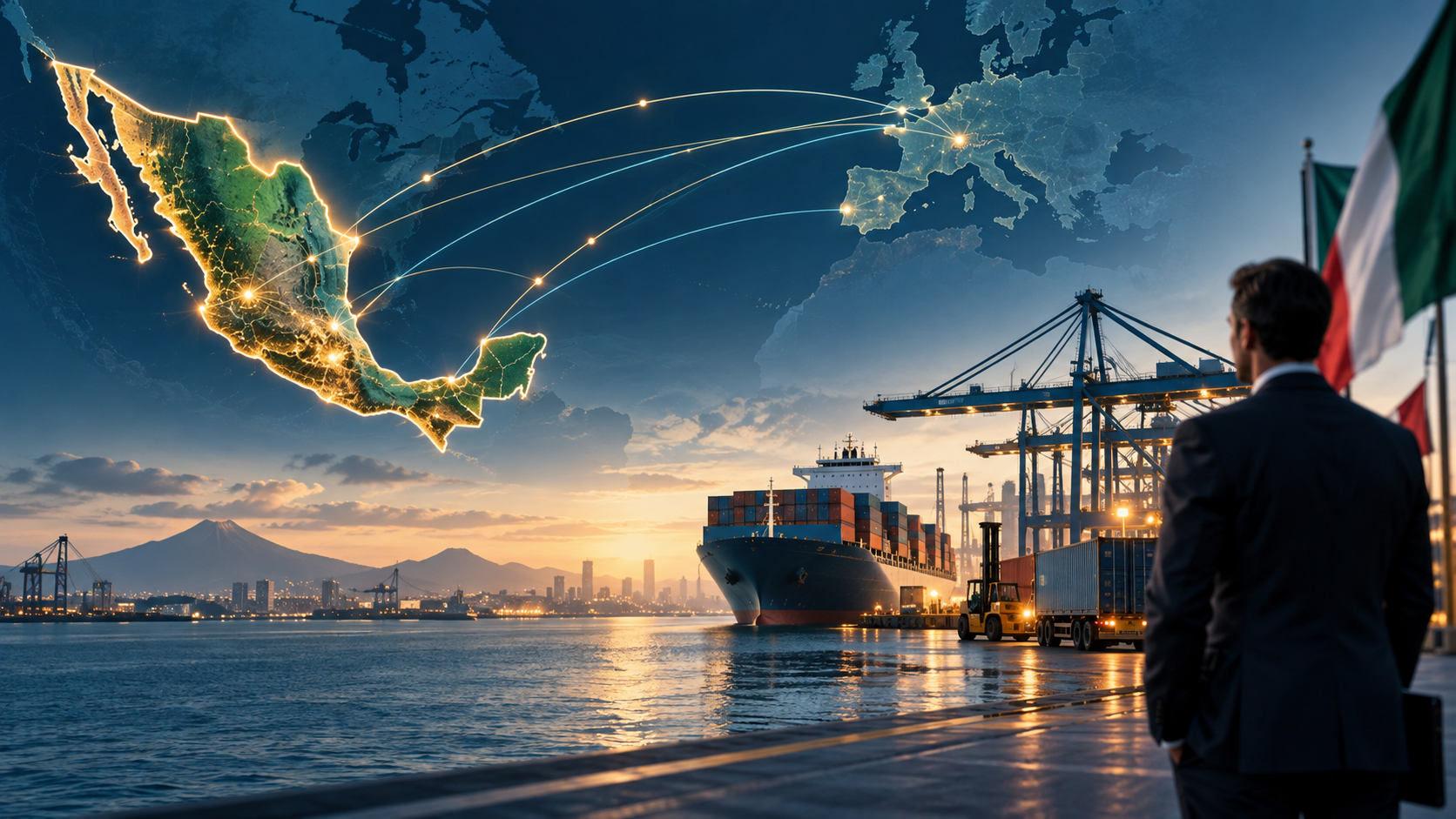
Regarding countries to monitor, in a previous interview with Milano Finanza, Fichera had already pointed to Mexico as a very promising market, especially for manufacturing investment. In Monterrey, the local government is attracting foreign investment with significant incentives.
It is also important to keep an eye on United Arab Emirates, Saudi Arabia and, in particular, the’India, described as “a market with impressive growth dynamics, but complex, requiring a careful cultural approach.” Indeed, India invites manufacturing with Western technologies, but using local labor.
Responding to the challenges of the global market: possible paths for Italian companies
In an environment where exporting to the US has become more complex due to new trade policies and tariffs imposed by the Trump administration, and further complicated by the Euro-dollar exchange rate fluctuations, the Italian economy faces significant challenges that can also turn into relevant opportunities.
This situation calls for a careful analysis of U.S. market penetration strategies, considering not only duties but also logistics costs and increasingly fierce competition.
While the geopolitical scenario is pending redefinition and new arrangements could be established, direct investment in the United States, through the establishment of subsidiaries or joint ventures, can be an effective strategy to mitigate the impact of tariffs and ensure greater long-term competitiveness. This approach also allows access to local financing and the benefit of government incentives, depending on the state chosen for establishment.
Beyond tariffs: opening a branch office in the United States
We have already discussed how open a company in the United States can facilitate business relationships with local companies, which often prefer to interact with companies subject to U.S. jurisdiction, thus simplifying administrative procedures and speeding up response times.
Opening a branch office in the United States is generally smooth due to a efficient bureaucracy, although it requires a thorough knowledge of local regulations. In addition, it is essential for companies to carefully evaluate the type of company to be formed, considering factors such as hiring employees, taxation of profits, and risk management. It is not necessary to have a visa, be a resident, establish a board of directors, have a U.S. partner, or pay a mandatory minimum capital. Choosing the most appropriate legal structure is critical to optimizing tax management and minimizing risk.
In the United States, the main corporate forms are. Sole Proprietorship, Corporation and LLC. The optimal choice depends on the specific needs of the business. Sole Proprietorship is simple, ideal for small businesses; Corporation offers legal protection but involves double taxation; LLC combines tax advantages and limited liability. Taxation on profits is 21%, with no fixed upfront costs, but requires tax planning. Registration requires choice of state, name verification, a registered agent, incorporation documents, an EIN, a bank account, and compliance with regulations. The process, although complex, can be quick and smooth if supported by professionals.
The global environment poses increasingly complex challenges for Italian companies wishing to export to the United States. It is precisely in this complexity, however, great opportunities are also concealed. It is essential to adopt a strategic approach that combines legal and tax expertise, local knowledge and advanced analytical tools.
Into this scenario comes a new tool designed precisely to facilitate the choices of Italian companies: the Smart Country Guide, recently presented by the Consulate General of Italy in Los Angeles and the Consulate General of Italy in San Francisco. The guide provides an in-depth overview of the 11 states on America's West Coast, highlighting sectoral opportunities,regulatory barriers, entry strategies and cases of entrepreneurial success. A true operations manual, full of up-to-date data and interactive resources, that helps you navigate the U.S. market with greater awareness and long-term vision. , For those who want to export or invest in the U.S., consult the Guide is the first step in building a solid, sustainable and competitive presence.
👉 Discover now the [Smart Country Guide] and start planning your U.S. entry strategy with the right support.
Frequently Asked Questions
Italian companies face several obstacles when exporting to the United States, including the imposition of tariffs, which affect transaction costs and product competitiveness. Furthermore, uncertainties related to U.S. trade policies require in-depth analysis of market penetration and adaptation strategies. It is crucial for businesses to evaluate available market opportunities and how tariff policies influence various production sectors. The diversification of trade policies will also necessitate new approaches in marketing and logistics. Finally, continuous monitoring of euro-dollar exchange rate fluctuations adds another layer of complexity.
Italian SMEs can adopt various strategies to mitigate the impact of US tariffs, such as opening branches in the United States, which simplifies operations and builds stronger business relationships. Furthermore, it is advisable to analyze foreign markets to understand local opportunities and risks, facilitating more informed decisions. Investing in artificial intelligence and analytical tools helps map and anticipate regulatory and market changes. It is essential to develop an international production presence, allowing for rapid adaptation to market conditions. Finally, aggregation among SMEs can improve competitiveness in the global context.
Various sectors of Italian production for export are in a delicate position due to American tariffs. In particular, the analysis reveals that sectors such as automotive, pharmaceutical, and components are under scrutiny, as their exposure to tariffs is significant. Furthermore, tariff variations will differ depending on the specific composition of exported products, leading to a non-uniform impact across all markets. Companies must carefully analyze their product lineup and identify any categories of goods that are exempt or have differentiated tariffs. This requires strategic planning to maximize benefits and reduce risks associated with tariffs.
Having a strategic guide for exporting to the USA is fundamental for Italian companies, as the US market is complex and constantly changing, especially due to regulatory fluctuations. The Smart Country Guide, for example, offers valuable resources for identifying business opportunities, regulatory barriers, and effective entry strategies. Adequate preparation allows companies not only to minimize risks but also to best leverage growth opportunities in the market. Keeping updated on relevant data and success stories helps develop a long-term vision for strategic positioning. Finally, this type of approach allows for building solid and consolidated business relationships with key players in the US market.
SHARE ARTICLESassy Social Share
If you want to learn more about the content of this article





 Italian
  English