By 2026, the supply chain will no longer be merely an operational function, but a strategic lever for companies’ international competitiveness. Geopolitical tensions, cost volatility, new ESG requirements, digitalization, and the need to diversify suppliers are driving companies to fundamentally rethink their procurement, production, and distribution models. In this scenario, internationalization and strategic sourcing become essential tools for reducing risks, improving margins, and building more resilient value chains.
Supply Chain in 2026: From Logistics Function to Strategic Lever
In recent years, businesses have understood that the Supply Chain can no longer be interpreted as a simple set of logistics, procurement, and supplier management activities. The pandemic, trade tensions, regional conflicts, and the instability of international transport have highlighted how supply chain continuity is directly linked to a company's ability to compete, serve customers, and protect margins.
In 2026, building an efficient supply chain will therefore mean striking a balance between cost, quality, reliability, and flexibility. The goal is no longer simply to buy at the lowest price, but to create a procurement system capable of responding quickly to shocks, diversifying risks, and ensuring production continuity even in unstable environments. The World Bank itself, through the Logistics Performance Index 2.0, highlights that logistics competitiveness today must be measured not only in terms of infrastructure, but also through operational indicators such as connectivity, transit times, and shipment reliability.
Why transform the supply chain in 2026
The transformation of the supply chain stems from a concrete need: to make the company less vulnerable to critical dependencies and better equipped to operate in complex international markets. According to the’OECD Supply Chain Resilience Review, Resilience is not built by closing markets or through a widespread return to domestic production, but through more agile, adaptable, and diversified supply chains.
For Italian companies, this means reviewing some key elements:
the geographic distribution of suppliers;
the role of individual countries in the supply chain;
the level of dependence on critical suppliers;
the ability to monitor timelines, costs, and risks;
consistency between production strategy, target markets, and international sourcing.
In many cases, supply chain transformation is also a response to competitive pressure. When costs rise, lead times lengthen, and customers demand greater reliability, companies must take action not only on pricing but also on their entire operating model.
Strategic Sourcing: The Heart of Transformation
Lo Strategic Sourcing It is one of the most important tools for rethinking the supply chain. Unlike tactical purchasing, which focuses on individual transactions, strategic sourcing systematically analyzes procurement markets, suppliers, risks, total costs, and partnership potential. This approach allows the company to shift from a purely reactive mindset to proactive supply management. It is not simply a matter of seeking alternative suppliers, but of building a supplier portfolio consistent with the company’s industrial and commercial objectives.
technical, financial, and reputational assessment;
Contract negotiation;
Continuous performance monitoring.
For Italian companies, this approach is particularly useful in the manufacturing sector, where components, semi-finished products, raw materials, and outsourced processing have a significant impact on profit margins and delivery times.
Internationalization of the Supply Chain: Diversify Without Fragmentation
Internationalizing the supply chain does not mean indiscriminately increasing the number of suppliers. Rather, it means building a more balanced supply network capable of reducing dependence on a single country or a single strategic partner.
In recent years, many companies have adopted strategies to China+1, nearshoring o regionalization. The goal is to maintain the advantages of global sourcing while reducing exposure to logistical blockages, geopolitical tensions, or excessive risk concentration. The OECD highlights that effective resilience is achieved more through geographical diversification and international cooperation than through aggressive reshoring strategies, which could reduce overall efficiency and competitiveness.
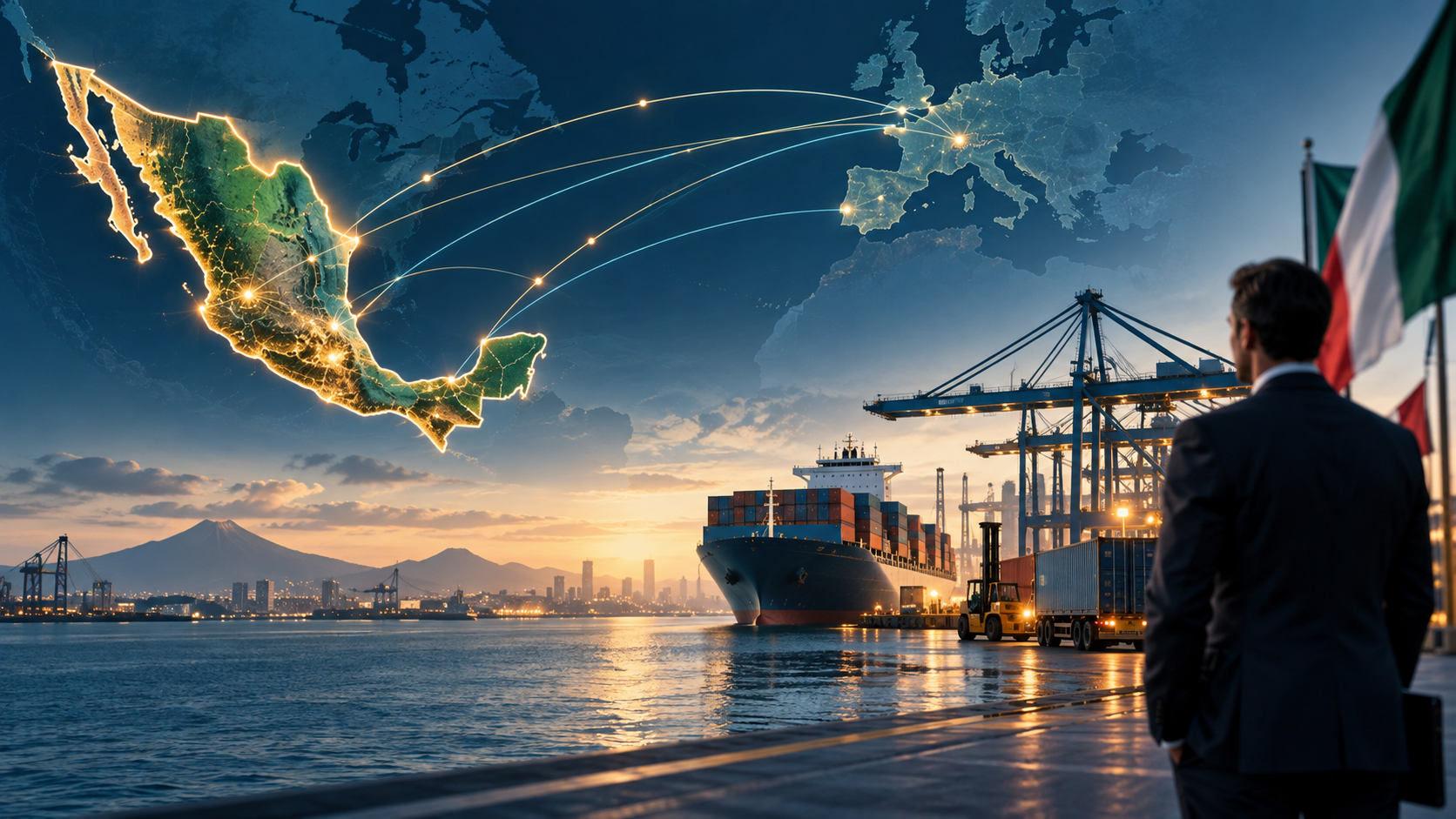
For an Italian company, the markets to evaluate depend on the sector and the supply category.’India can represent an interesting option for components, industrial processing, engineering, and some manufacturing sectors. Vietnam and the ASEAN region are relevant for labor-intensive productions and electronic or textile supply chains. Eastern Europe can be strategic for nearshoring and reducing logistics times. The Mexico assume an increasing role for those operating in supply chains linked to North America.
Resilience, total cost, and risk management
One of the most frequent errors in Supply Chain management is evaluating suppliers solely based on unit price. In 2026, this logic is becoming increasingly unsustainable. The true indicator to consider is the Total Cost of Ownership, which includes not only the purchase price but also transport, duties, scrap, delivery times, quality, currency risk, inspection costs, safety stock, and the impact of any disruptions. A seemingly cheaper supplier can become more expensive if it causes delays, non-compliance, or necessitates continuous checks. Conversely, a slightly more expensive but reliable supplier can improve overall profitability by reducing inefficiencies and operational risks. In 2026, Supply Chain risk management must also consider new or more relevant factors than in the past:
geopolitical instability;
freight rate volatility;
Climate risks;
cyber risk;
sanctions and trade restrictions;
ESG requirements;
supplier financial continuity.
Marsh Highlight how supply chain risks remain one of the main challenges for economic resilience and business continuity in 2026, with impacts related to economic volatility, climate events, labor shortages, cyberattacks, and geopolitical conflicts.
Digitalization and AI in the Supply Chain
Supply chain transformation also involves digitalization. The most advanced companies are investing in monitoring tools, collaborative platforms, analytics, demand forecasting systems, and solutions based on artificial intelligence.The goal is to improve visibility along the chain, anticipate critical issues, and make faster decisions. Gartner highlight how AI, skill transformation, and human-machine collaboration are among the central factors for the future of the Supply Chain. The most relevant applications include:
demand forecasting;
anomaly detection;
Supplier performance monitoring;
alternative scenario simulation;
inventory optimization;
Country risk assessment and supplier risk assessment;
procurement process automation.
However, technology alone is not enough. To generate value, it must be integrated with clear processes, internal expertise, and adequate governance. Many companies have data, but they don't always succeed in transforming it into operational decisions.
ESG and supply chain sustainability
Another central element of Supply Chain 2026 is sustainability. Customers, investors, and regulatory authorities increasingly demand Supply chain transparency, on suppliers and the environmental and social impact of production activities. This means that the selection of suppliers must include environmental, social, and governance criteria. It is not enough to evaluate price and quality: it is also necessary to understand how the supplier produces, what standards they apply, how they manage labor, safety, emissions, waste, and traceability. For exporting Italian companies, supply chain sustainability also becomes a market access requirement. In numerous B2B sectors, especially when dealing with multinational clients, the ability to demonstrate a controlled supply chain that complies with ESG standards can directly affect the possibility of being qualified as a supplier.
How to set up a Supply Chain Transformation Project
Effective transformation requires method. The first step is Map the existing supply chain, identifying critical suppliers, countries of origin, most sensitive categories, average procurement times, and risk areas. Subsequently, priorities must be defined: cost reduction, supplier diversification, lead time reduction, quality improvement, geopolitical risk mitigation, or ESG strengthening. Without clear priorities, the risk is to initiate fragmented and ineffective activities.
A possible roadmap can be broken down into five phases:
Initial Assessment, to understand the structure, costs, risks, and dependencies of the current chain.
Strategy definition, identifying critical categories and target countries.
Supplier scouting, to identify and qualify new international suppliers.
Negotiation and validation, with sampling, audits, quality tests, and contract definition.
Continuous monitoring, through KPIs, supplier scorecards, and improvement plans.
This approach allows for the progressive transformation of the supply chain, reducing the risk of operational disruption.
The role of local partners
In international sourcing projects, knowledge of the local market is crucial. Identifying a potential supplier is only the first step; it is necessary to verify their reliability, production capacity, financial stability, quality, reputation, and cultural compatibility. The presence of a local partner can accelerate activities such as:
Supplier research and selection;
company visits;
negotiation;
Document verification;
Quality control;
management of linguistic and cultural differences;
Operational follow-up.
For this reason, in complex markets, relying on structured support helps reduce risks, time, and hidden costs.
Errors to avoid
When rethinking the supply chain, many companies make recurring mistakes. The first is seeking alternative suppliers only when an emergency arises. In these cases, time is short, and the company's negotiating power is reduced.
A second error is focusing solely on price, neglecting quality, reliability, production capacity, and operational risk. A third critical element is the lack of adequate due diligence: without thorough checks, the risk of selecting unsuitable partners increases significantly.
Other frequent errors include the failure to define KPIs, the absence of clear contracts, poor intellectual property protection, and underestimation of cultural differences in negotiation processes.
Frequently Asked Questions about Supply Chain Transformation
What is Supply Chain Transformation and what does it concretely involve for a company?
Supply chain transformation is the structured process through which a company deeply redesigns its sourcing, manufacturing, and distribution models. It is not a simple technological upgrade or a renegotiation of contracts with existing suppliers, but a strategic review that affects the entire value chain. Concretely, for an Italian manufacturing company, this means analyzing the geography of its suppliers, assessing the level of dependence on individual countries or critical suppliers, introducing digital monitoring and visibility tools, and aligning the sourcing strategy with medium-to-long-term commercial and production objectives. The ultimate goal is to build a supply chain capable of ensuring operational continuity, protecting margins, and supporting international growth even in unstable geopolitical contexts.
Why is strategic sourcing important in 2026 and what are its advantages compared to traditional purchasing?
In 2026, strategic sourcing is no longer an option reserved for large multinational corporations, but a competitive necessity for Italian SMEs as well. Unlike traditional purchasing, which focuses on individual transactions and often favors the lowest price in the short term, strategic sourcing adopts a systemic, long-term view. The concrete benefits are many: reduction of total cost of ownership (TCO), greater supply reliability, diversification of geopolitical risk, improved quality of components and semi-finished products, and the development of partnership relationships with strategic suppliers. In a context where energy costs, customs duties, and exchange rate volatility increasingly impact business margins, having a structured sourcing process means being able to anticipate problems instead of reacting to them.
How do you build a resilient supply chain, and where do you start?
Building a resilient supply chain is a journey that unfolds in progressive phases. The starting point is always a thorough mapping of the existing supply chain: who are the first, second, and third-tier suppliers? What are the most critical product categories? Where are the greatest risks of disruption concentrated? Based on this analysis, the company can define a geographic diversification strategy, identifying alternative sourcing markets in countries such as Vietnam, India, and Mexico. In parallel, it is essential to introduce digital supply chain visibility tools that allow for real-time monitoring of material flows, delivery times, and supplier performance KPIs. Finally, resilience also comes from the accurate qualification of partners: it's not enough to find a new supplier; you need to verify their financial stability, production capacity, regulatory compliance, and alignment with the company's ESG requirements.
What are the main risks in managing the international supply chain, and how can they be mitigated?
The risks in managing an international supply chain are multiple and often interconnected. The first is dependence on single suppliers or a limited number of sourcing countries: when a single source is interrupted, the entire production chain grinds to a halt. The second is geopolitical risk, which in 2026 manifests through tariffs, trade sanctions, regional conflicts, and export restrictions on critical raw materials. The third is quality and compliance risk, particularly relevant for companies sourcing from countries with production and regulatory standards different from European ones. The fourth is reputational and ESG risk: purchasing from suppliers who do not adhere to environmental or social standards can expose the company to significant legal and commercial consequences. Added to these is a fifth, increasingly relevant risk: cybersecurity. According to World Economic Forum, According to the 65% survey of large enterprises, supply chain vulnerabilities are cited as the main obstacle to cybersecurity resilience, making the verification of suppliers’ digital security policies an integral part of any qualification process. To mitigate these risks, more structured companies adopt a multi-sourcing approach, build strategic security stockpiles for critical components, implement continuous supplier audit systems, and establish supply chain-specific business continuity plans.
What is meant by supply chain visibility, and why has it become a priority in 2026?
Supply chain visibility is a company’s ability to monitor in real time all material flows, orders, and supplier performance throughout the entire supply chain, from the raw material supplier to delivery to the end customer. It has become a priority in 2026 because the growing complexity of global supply chains, combined with geopolitical instability and market volatility, makes it impossible to manage the supply chain reactively. Without comprehensive visibility, companies only discover problems when it is too late to intervene. Digital visibility tools—such as supply chain management platforms integrated with AI and IoT—allow companies to anticipate risks, optimize inventory, and make decisions based on up-to-date data. According to a March 2026 Gartner report, by 2031, 60% of supply chain disruptions will be resolved without human intervention thanks to AI. For Italian SMEs operating in international markets, investing in visibility means transforming the supply chain from a cost center into a competitive advantage.
How are ESG criteria integrated into supply chain management?
The integration of ESG (Environmental, Social, and Governance) criteria into the supply chain is currently one of the most relevant topics for Italian companies operating in international markets, particularly towards European and North American clients. On the environmental (E) front, it means evaluating suppliers' carbon footprint, favoring partners who use renewable energy and sustainable materials, and optimizing transportation to reduce emissions. On the social (S) front, it involves verifying working conditions at production sites, ensuring respect for workers' rights throughout the chain, and promoting diversity and inclusion. On the governance (G) front, it requires transparency in supplier selection processes, anti-corruption policies, and compliance with local and international regulations. In practice, the most advanced companies integrate ESG criteria already in the scouting and qualification phases of suppliers, through sustainability questionnaires, third-party audits, and ESG rating systems. This approach is not just a matter of compliance but is becoming a competitive factor: end clients, especially in international B2B, increasingly request ESG documentation as a condition for initiating or renewing supply contracts.
How long does a supply chain transformation take, and what results can be expected at each stage?
The timeline for a supply chain transformation varies depending on the company’s size, the complexity of the supply network, and the scope of the desired change. Generally speaking, a structured process is divided into three timeframes. In the short term—between 0 and 6 months—the mapping of the existing supply chain and the analysis of risks and critical dependencies are completed, and the initial scouting of alternative suppliers begins: in this phase, it is already possible to achieve tangible results in terms of cost reductions across certain product categories. In the medium term, between 6 and 18 months, new sourcing strategies are implemented, new suppliers are qualified, supply chain visibility pilot projects are launched, and internal procurement and supplier management processes are redesigned. In the long term, between 18 and 36 months, the transformation is consolidated: the new supply structure is operational, digital systems are integrated, performance KPIs are continuously monitored, and the company has developed the necessary internal capabilities to manage a complex international supply chain. Expected benefits include a reduction in TCO of between 10% and 25%, a significant decrease in stockouts and delays, and an improved ability to respond to external shocks.
Supply Chain 2026: Competitiveness Starts with the Supply Chain
In 2026, rethinking one's supply chain is no longer an option, but a strategic necessity for Italian companies aiming for international growth. Competitiveness is increasingly determined by the ability to build solid, flexible, and transparent chains that can withstand external shocks without compromising continuity and profitability.
Internationalization, strategic sourcing, risk management, and digitalization are not separate paths; they are the four levers of a single system. Companies that can integrate them cohesively will be best positioned to seize opportunities in global markets, reduce structural vulnerabilities, and build a lasting competitive advantage.
Frequently Asked Questions
The internationalization of the supply chain has become a necessity for Italian companies aiming to remain competitive in an evolving global market. Geopolitical challenges and logistical crises have made the importance of diversifying sourcing apparent. Furthermore, adopting a strategic approach to sourcing allows for cost optimization and improved production performance. This enables companies to ensure operational continuity while minimizing risks associated with single suppliers. Adopting an international supply chain also offers new opportunities for growth and innovation.
The first step to effective strategic sourcing is to conduct a thorough analysis of the procurement market. It is crucial to assess the economic strength of the market and identify specialized industrial districts. Subsequently, supplier selection must go beyond the analysis of commercial offers, including factors such as financial stability and regulatory compliance. A further crucial phase is country risk management to avoid issues related to political instability or currency fluctuations. The use of analytical tools such as the Kraljic Matrix and Vendor Rating facilitates an objective evaluation of suppliers.
Companies can adopt various mitigation measures to reduce the risks associated with internationalization. An effective strategy is diversifying supply sources, which helps avoid problems related to dependence on a single supplier. Additionally, negotiating flexible contracts allows for greater responsiveness in contexts of high uncertainty. Investing in intercultural training for the procurement team is equally crucial, as it improves supplier relationship management. Finally, continuous analysis of markets and regulations enables companies to stay updated and prevent potential bureaucratic obstacles.
Cultural dynamics play a fundamental role in the internationalization of the Supply Chain, as each country presents unique business practices. Understanding these differences is essential for successful negotiations, especially in emerging markets. For example, in China, building long-term relationships is often necessary, while in India, the approach is more competitive and dynamic. Investing in knowledge of cultural practices facilitates the sourcing process, making it more effective and sustainable. Awareness of cultural dynamics, along with an understanding of local regulations, is crucial to avoid delays and ensure operational compliance.
SHARE ARTICLESassy Social Share
If you want to learn more about the content of this article






 Italian
  English