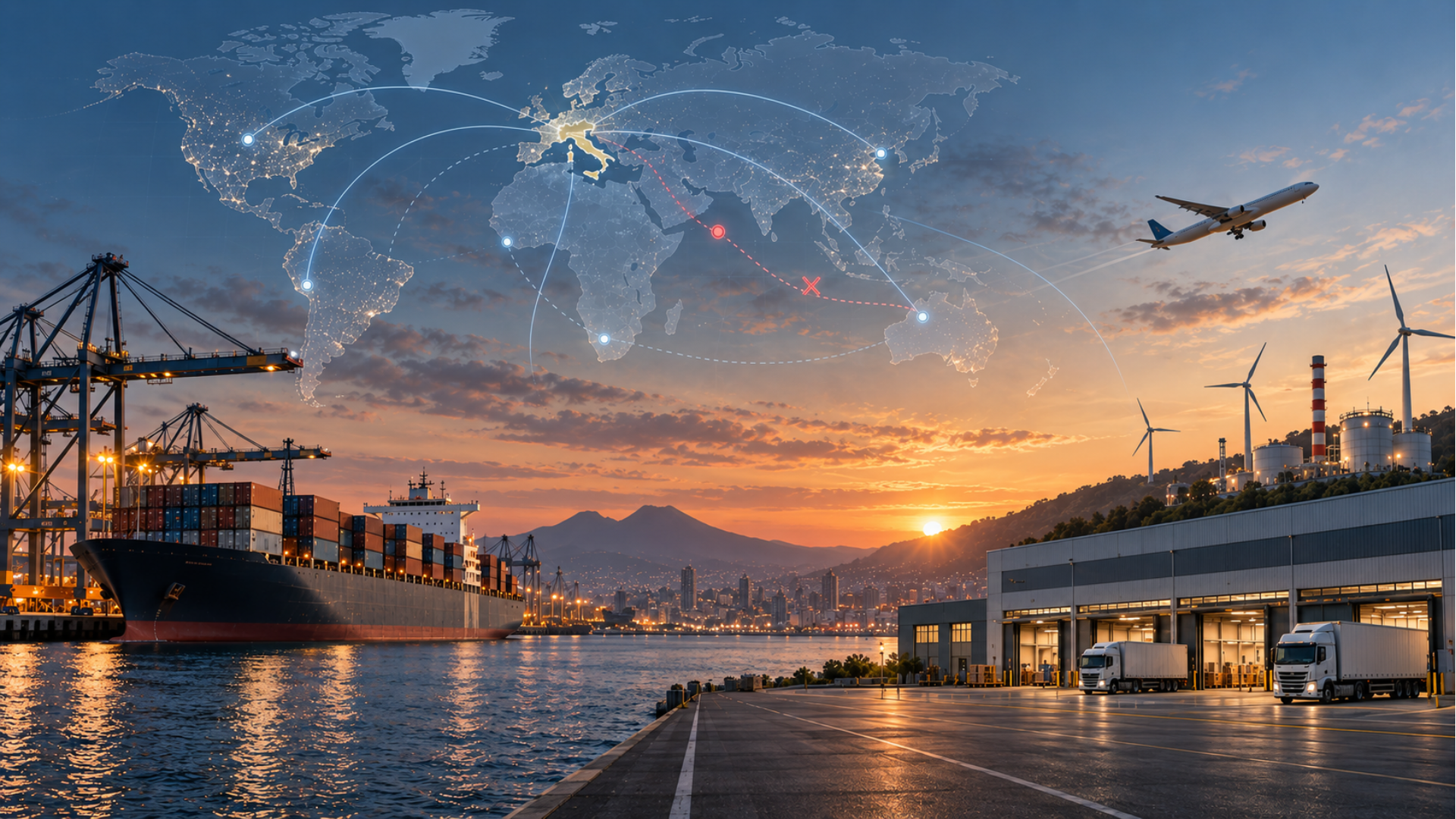
The use of Artificial Intelligence (AI, short for Artificial Intelligence) in the logistics industry is growing exponentially, making the management of the Supply Chain A more streamlined and accurate process.
AI can indeed analyze large amounts of data in real time and perform complex predictive analytics. This is reflected in optimized management of warehouses and delivery routes, enabling a more efficient supply chain at every step. It also enables cost and waste reduction, and significantly improved customer service.
The impact of artificial intelligence on the Supply Chain: the benefits of this synergy
Artificial Intelligence is at the heart of the fourth industrial revolution, empowered by Machine Learning, a process that enables computers to continuously learn from information and process it appropriately to accomplish certain tasks.
Given its great potential, Its use is becoming increasingly widespread in many sectors, including logistics.
Projections indicate that by 2025, about 80% of new technology solutions for supply chain management will make use of artificial intelligence and data science in various ways.
AI continues to make steady progress, adapting to market changes and contributing to supply chain optimization.
Through comprehensive optimization of the Supply chain management, it enhances the competitiveness of companies and, at the same time, improves the customer shopping experience as we will see more in this article.
We examine in detail the interaction of AI with the supply chain, analyzing its impact and the significant benefits it brings.
Demand forecasting through artificial intelligence
Through AI-led analysis of historical data and market trends, it has become possible to predict future market demand with great accuracy. In this way, companies are able to effectively customize their offerings, minimizing waste and ensuring product availability when required. These are. an aspect of crucial importance, especially for those enterprises operating in the area of the’export and have to manage more complex logistics.
Indeed, the capabilities of AI algorithms include analyzing data on purchases and consumption trends to suggest complementary products or special offers, effectively realizing a more personalized shopping experience. This not only improves customer satisfaction, but also increases loyalty and, consequently, the number of sales.
In addition, the use of AI in predictive demand analysis enables companies to anticipate market changes and quickly adopt new sourcing and production strategies.
Operational efficiency is thus improved, and provided a not inconsiderable competitive advantage in an increasingly dynamic and competitive market.
The management of delivery routes through AI
Thanks to artificial intelligence algorithms, it is also possible to detect the paths delivery more efficiently, saving time and money: unoptimized routes and unsuitable transportation means inevitably lead to higher costs.
Artificial intelligence algorithms, on the other hand, make it possible to identify the most convenient and efficient transportation means and routes by considering various factors such as geographic features, weather conditions, and logistical patterns. For these reasons, according to reports by Analytics Insight, the global AI market in transportation is growing at a compound annual rate of 15.8% and is expected to reach $3.8 billion by 2025. By reducing mileage and optimizing resources, companies therefore can save significantly on transportation costs.
This aspect is particularly relevant for companies that have embarked on a d’internationalization, as efficient logistics and reduced transportation costs are key to competing effectively on a global scale.
Progressive inventory optimization using artificial intelligence
AI offers the ability to considerably automate inventory management by signaling the need for new orders in real time.
It thus allows for a constant comparison of supply and demand trends, avoiding both an excess of products and a shortage of them in the warehouse. In this way, customers can count on a production rhythm that always meets their needs.
The identification of anomalies in the data of the Supply Chain
Artificial intelligence is also capable of promptly detecting anomalies in the supply chain.It can indeed quickly detect errors of different types or poor efficiency in logistics processes, enabling so companies to take timely action to set up appropriate corrections.
For example, AI can register an increase in delivery time on a specific route and identify the cause and propose appropriate solutions.
This predictive capability is essential for maintaining high service standards, even more so because it can include insights on how to further optimize logistics operations, and better adapt to the needs of an ever-changing market.
Improving the customer experience through AI
Within today's conception of Supply Chain, attention to the customer experience occupies a central role, with Artificial Intelligence playing a key role in its enhancement. Through it, businesses can indeed improve their understanding of customer needs and offer increasingly personalized and targeted services.
AI, for example, is able to suggest products based on previous purchases customer's, and to provide real-time information on the status of deliveries.
Through more timely deliveries, optimal inventory management, and a highly personalized service, the company's reputation can grow considerably, increasing trust toward the brand.
Integration of Artificial Intelligence in the Supply Chain Management: challenges in the immediate future
The role of AI in the transformation of the logistics industry became clear in an analysis conducted by Gartner last year, which identified AI as one of the most strategic technologies for improving operational efficiency and system resilience.
However, in the near future Artificial Intelligence will have to overcome new challenges for responsible integration into the Supply Chain, addressing legal, ethical and sustainability issues.
Data privacy, especially in the context of the Supply Chain, poses an obvious challenge because it involves several separate companies that have specific reasons for keeping their information confidential, such as competing in the marketplace and needing to gain advantages in business negotiations.
Although AI makes it possible to optimize the supply chain and customize it to best respond to atthe needs of customers, the data sharing required for such progress may be met with resistance from many companies.
Beyond this, it remains clear that Artificial Intelligence is driving major changes in the logistics industry, introducing innovations that are transforming operational dynamics and that seemed unthinkable just a few years ago.
The implementation of AI in the Supply Chain thus emerges as a determining factor for all those enterprises eager to remain competitive, especially in international contexts.
If your company deals with many markets globally and you are interested in learning more about integrating Artificial Intelligence into supply chain management, please do not hesitate to contact us.
With the experience of our experts, we will be able to support you on your path to growth.
SHARE ARTICLESassy Social Share
If you want to learn more about the content of this article




 Italian
  English