Export boom in France: Italy redraws the map in the face of US duties
Summary
The article analyzes how U.S. tariffs have acted as a catalyst for Italian companies, prompting them to strategically reorient toward European markets. What emerges is a real boom in the’export to France, which has been confirmed as a privileged trade partner with very high potential. The most successful sectors-from agribusiness to mechanics to the fashion and design system-are examined, and practical guidance is provided for approaching the French market. The analysis stresses the importance of understanding the cultural specificities of transalpine business and taking a prepared approach to turn this trend into a solid and lasting growth opportunity.
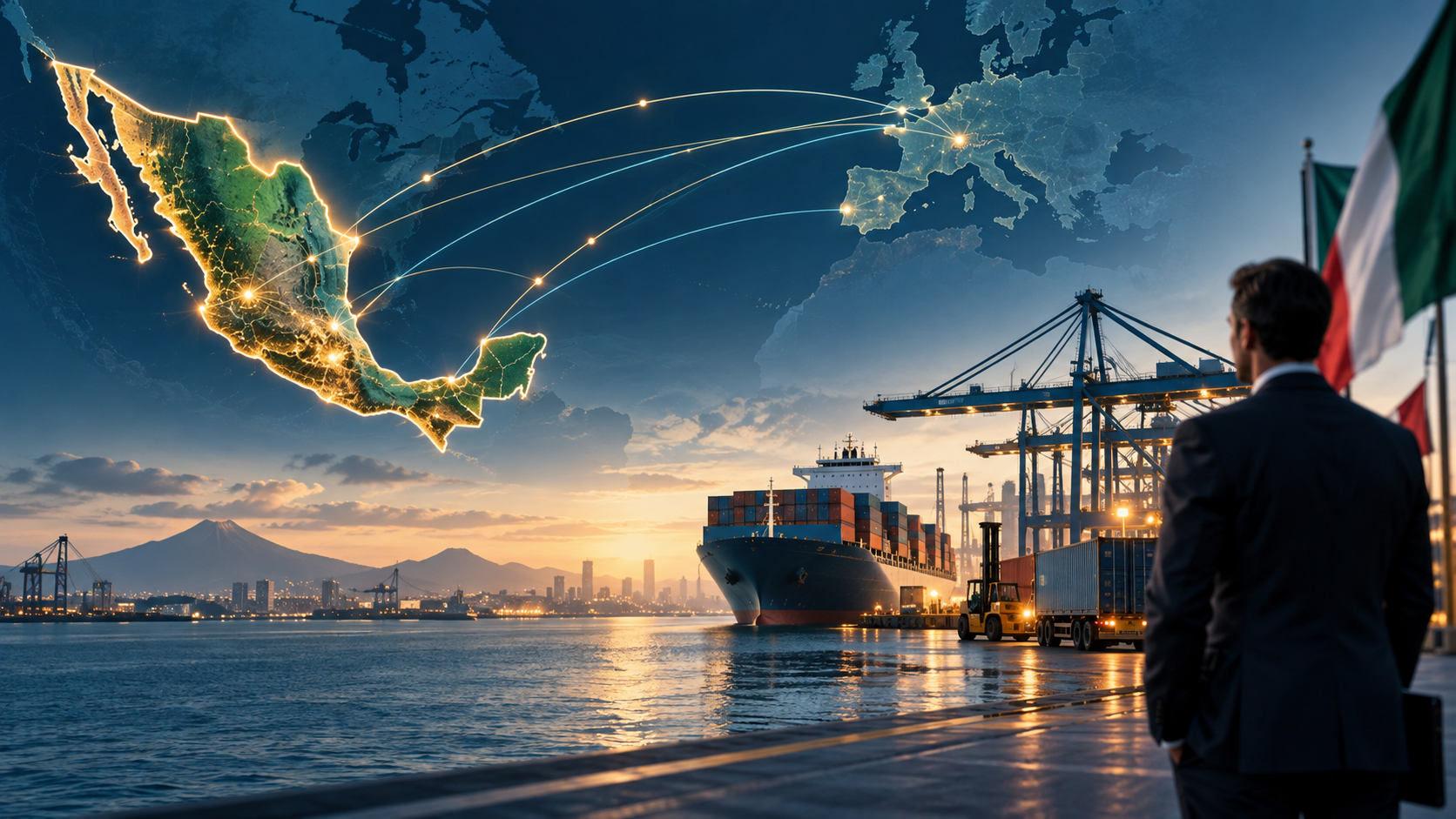
The boom of the’export to France is Italian companies' most powerful response to an increasingly complex global geopolitical and economic environment marked by trade tensions and protectionist policies. The recent imposition of tariffs by the United States, historically one of the most important outlet markets for the Made in Italy, could have been a huge blow to our productive fabric. Instead, it is turning into a catalyst for a profound and strategic redefinition of trade routes, with a renewed focus on European partners.
The most recent figures are telling, to say the least, and confirm this trend. In first quarter of 2025, exports from some of Italy's leading manufacturing districts have soared staggeringly to markets on the Old Continent. This dynamic shows that diversification is no longer an option, but a strategic necessity that Italian companies are embracing with remarkable success and speed.
The reaction of Italian companies and the export boom in France
France, in this new scenario, takes a leading role. The increase in sales is not an isolated phenomenon, but the result of a strategic reaction on the part of the Italian business fabric. An emblematic example comes from areas with a high export vocation such as Florence, where exports to France grew by 60.7% in the first months of 2025, accompanied by even more spectacular growths to Spain (+237%) and the United Kingdom (+218.7%) (Source: Reuters). These figures indicate a clear reorientation that sees the transalpine partner as a safe, receptive, and high-potential port of call.
This responsiveness is not accidental, but is supported by a strong institutional network. Chambers of Commerce and internationalization agencies are playing a key role, multiplying initiatives to facilitate access to new markets. The support takes the form of dedicated export platforms that facilitate B2B meetings, contributions for participation in international trade fairs, and a dense search for reliable business partners in alternative markets to the United States. The emerging vision is clear: the European route is viable and can be enhanced with the right strategies and support.
A historical partner at the center of the new business strategy
The connection between Italy and France is more than just geographical proximity. It is a deep and historical partnership, with trade exchanges steadily exceeding 100 billion euros annually. According to ICE data, Italy is France's second largest customer and its fifth largest supplier. This relationship is cemented by a dense network of mutual investment: France is the leading investor in Italy, with Foreign Direct Investment (FDI) stock of 87.8 billion euros, and France's 2,200 branches in our country employ as many as 300,000 people. This picture defines a real “irreversibility of industrial and trade relations.”.
This fertile ground is the foundation on which the success of the’export to France. Although culturally related, the two markets have substantial differences in the way they do business. The French consumer and entrepreneur greatly appreciate Made in Italy, but they require a structured and formal approach. In France, “form is substance”: curated communication, elegant catalogs and well-written presentations are the first calling card. Communicating in French, even if English is widespread, is not just a courtesy, but a clear signal of commitment and respect, capable of opening doors that would otherwise remain closed.
Building a solid business relationship requires time, patience and constant follow-ups. The French market is reflexive and does not like improvisation. Accuracy, punctuality and consistency are non-negotiable values. Therefore, a company aiming for a successful export to France must prepare with bilingual materials, clear and adapted price lists, impeccable logistics and structured after-sales support.
Key sectors: from cheese to design, Made in Italy conquering the Hexagon
Italian success beyond the Alps is based on some historical pillars of our export, which today find even more fertile ground, according to data presented by our Ministry of Foreign Affairs and International Cooperation.
Agribusiness: the Italian taste revolution
The agribusiness sector is the perfect example of Italian-French synergy. The French, among the world's largest consumers of cheese (more than 25 kg per capita per year), have enthusiastically embraced Italian dairy products. Italy covers one-third of French cheese imports, a value that has been growing over the past two years. The real news is the change in consumption habits: the traditional “plateau de fromages” at the end of a meal is increasingly giving way to snacks, aperitifs and ingredients for quick preparations. In this, the versatility of Italian cheeses is winning. Mozzarella, for example, has made a historic overtaking: in 2021 it surpassed Camembert to become the most consumed soft cheese in France. This success is driven by the large-scale retail trade (GDO), where chains such as E. Leclerc and Monoprix dedicate private label (MDD) product lines to Italian specialties. The success of exports to France in this sector is linked to the ability to interpret these new trends, offering innovative formats and communication that enhances the tradition and PDO and PGI quality of products such as Parmigiano Reggiano and Gorgonzola.
Mechanics and machinery: the excellence of know-how
The instrumental mechanics is one of the most important items in our exports to France. Italy is the second largest supplier to the French market after the Germany, a recognition of the very high level of technology and know-how of our companies in sectors such as agricultural machinery, machine tools and, above all, packaging and components machinery. This innovation-intensive sector is crucial to the competitiveness of French industry and represents a strategic opportunity for high value-added exports to France.
Fashion, furniture and design: Italian style as an absolute value
The fashion system and the furniture industry are perhaps the most iconic expression of Made in Italy. France, with Paris as the fashion capital of the world, is a demanding but extremely receptive market. In 2024, French fashion imports amounted to 18.36 billion euros, with Italy carving out a slice of about 3.17 billion. We are the top supplier for footwear (23.8% of market shares) and absolute dominator in leather clothing and accessories (53% of shares). Similarly, in furniture and design, Italy is the first and leading supplier to the French market. The increase in exports to France in these areas is a confirmation of a globally recognized stylistic and qualitative supremacy, consolidated by the strategic presence at trade fairs such as Maison&Objet and Who's Next in Paris.
Practical guide to entering the French market
For companies wishing to ride this positive wave, a strategic approach is critical to successful exporting to France. This path, while facilitated by European Union membership and the absence of customs duties, requires careful planning in four key areas:
Standards and certifications: careful verification and full compliance with French regulations on labeling, composition and traceability are crucial, especially in the most regulated sectors such as food and cosmetics.
Logistics and distribution: geographic proximity is a competitive advantage that must be exploited with a fast, reliable and traceable logistics system, which is essential for approaching the powerful and widespread large-scale retail trade.
Trade show presence: Attending or even visiting the major international trade fairs held in France (such as SIAL for food or EquipHotel for contracting) is a strategic investment to understand local dynamics, gain visibility and make direct contacts with buyers.
Cultural and linguistic adaptation: investing in French translation of all marketing and communication materials, and having staff who can interact fluently in the language, is a key factor in building the confidence necessary for success.
Meeting these challenges requires not only preparation, but also expert guidance capable of translating market analysis into concrete action.
A reaction that becomes a strategic opportunity
The reaction of Italian companies to the challenge of the U.S. duties is a powerful example of how a crisis can be turned into an opportunity for growth and strategic strengthening. The export boom in France, Germany, Spain, and the United Kingdom is not simply offsetting losses, but a structural rebalancing which makes our production system less vulnerable to the fluctuations of a single market and ultimately more robust.
France, with its strong economy, cultural proximity and hunger for high-quality products, is emerging as the linchpin of this new trade geography, making exports to this country a strategic priority for many companies. Success, however, is not a given. It requires preparation, investment and a deep understanding of the dynamics of a sophisticated market. It is in this scenario that a specialized partner can make the difference, turning potential into concrete results.
In Octagona we support Italian companies in their internationalization journey, defining the most effective strategies for dealing with complex markets. To turn the export opportunity in France into a concrete success, contact our consultants For an initial strategic analysis.
Frequently Asked Questions
Diversi fattori sono alla base del boom dell'export italiano verso la Francia. La recente imposizione di dazi da parte degli Stati Uniti ha spinto molte imprese italiane a riorientare le loro strategie commerciali verso l'Europa. La Francia emerge come un partner commerciale privilegiato, condividendo affinità culturali e un forte potenziale di mercato. Inoltre, il sostegno fornito dalle Camere di Commercio e dalle agenzie di internazionalizzazione ha facilitato l'accesso al mercato francese. Le statistiche recenti confermano un'impennata nelle esportazioni, rendendo questa dinamica un'opportunità strategica per le aziende italiane.
I settori di maggior successo per l'export italiano in Francia includono l'agroalimentare, la meccanica e il sistema moda. Nel settore agroalimentare, i formaggi italiani, in particolare, stanno avendo un'incredibile accoglienza, con la mozzarella che ha superato il camembert in termini di consumo. La meccanica strumentale rappresenta un altro pilastro, con l'Italia riconosciuta come secondo fornitore del mercato francese, specialmente nelle macchine per l'imballaggio. La moda, con il prestigioso marchio 'Made in Italy', sta guadagnando quote significative nel mercato francese. Questi settori, grazie alla loro qualità e innovazione, dominano il panorama dell'export verso la Francia.
Per avere successo nell'export verso la Francia, le aziende italiane devono seguire strategie ben definite. È fondamentale rispettare le normative locali riguardanti etichettatura e tracciabilità, specialmente nei settori alimentari e cosmetici. La logistica è altrettanto importante e deve garantire distribuzione rapida e affidabile, sfruttando la vicinanza geografica. La partecipazione a fiere internazionali è un modo efficace per ottenere visibilità e stabilire contatti diretti con i buyer francesi. Infine, investire nella traduzione dei materiali di marketing in francese è essenziale per costruire fiducia e relazioni durature.
Il mercato francese riveste un'importanza strategica per le imprese italiane, rappresentando un'opportunità di diversificazione fondamentale. Non solo è un partner commerciale di lungo corso, ma offre anche un'economia solida e una domanda crescente di prodotti di alta qualità. Inoltre, comprendere e adattarsi alle specificità culturali del business in Francia può fare la differenza nel successo commerciale. Le aziende italiane hanno l'opportunità di consolidare la loro presenza in Europa, riducendo la dipendenza da mercati più instabili. Investire tempo e risorse nella preparazione per il mercato francese permette di trasformare le sfide in occasioni di crescita.
SHARE ARTICLESassy Social Share
If you want to learn more about the content of this article





 Italian
  English