Octagona/Internationalization News/Temporary Export Manager and Digital Export Manager in 2026: Roles, Differences, and Advantages for Italian Businesses
Temporary Export Manager and Digital Export Manager in 2026: Roles, Differences, and Advantages for Italian Businesses
Summary
In 2026, internationalization represents a strategic lever for the growth of Italian companies, especially in a context characterized by geopolitical transformations, digitalization of commercial processes, and the redefinition of global value chains. To tackle foreign markets with a structured approach, many companies rely on professionals dedicated to international development: the Temporary Export Manager (TEM) and the Digital Export Manager (DEM).
These figures allow companies to acquire specialized skills without immediately incurring the costs of an in-house export department. Understanding the roles, skills, and differences between TEM and DEM is essential today for building effective global market growth strategies.
In recent years, exports have been confirmed as one of the pillars of the Italian industrial system's competitiveness. According to ISTAT, in 2024, the value of Italian goods exports exceeded 626 billion euros, consolidating Italy's role as one of Europe's leading exporters. Forecasts indicate that international trade will continue to grow in 2026, but with more complex dynamics than in the past. World Trade OrganizationWorld Trade Organization) Global trade in goods is estimated to grow moderately, influenced by geopolitical tensions, supply chain realignments, and increasingly national industrial policies.
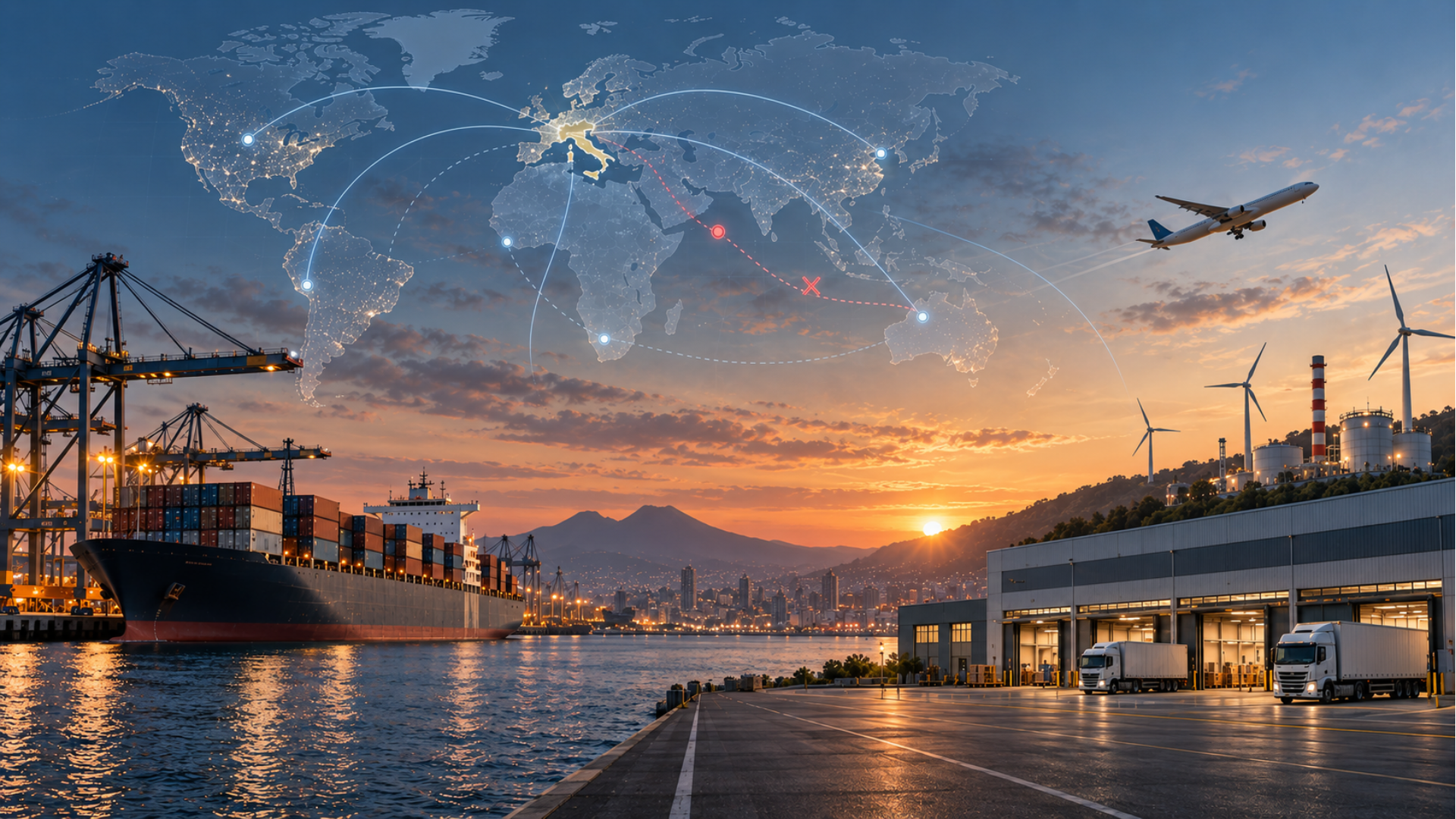
In recent years, various geopolitical events have indeed contributed to reshaping the landscape of international trade. War in Ukraine has generated strong tensions in European energy markets and supply chains; the Trade and technological tensions between the United States and China, which are pushing many companies to diversify their supply chains; the logistical crises in Red Sea and in the Strait of Hormuz, which have highlighted the vulnerability of major global maritime trade chokepoints; and, more generally, the increasing reliance on industrial policies and protectionist measures from several advanced economies. In this scenario, Italian companies are called upon to face new challenges:
higher market volatility
increasing regulatory complexity
increase in logistical and energy costs
greater international competition
growing importance of digital in sales processes
For this reason, it becomes essential to acquire specific skills in the area export and international business development.
What does a Temporary Export Manager do: role and main activities
The Temporary Export Manager (TEM) They are a professional figure specialized in developing international markets who operates within the company for a defined period of time, with the aim of supporting or accelerating the internationalization process. Unlike a permanently hired export manager, the TEM intervenes with a temporary mandate and clear objectives, making expertise and experience gained in various markets and sectors available to the company.
In the current context, characterized by the increasing complexity of global markets, the role of the Temporary Export Manager takes on a strategic function. It is not simply a sales figure tasked with increasing foreign sales, but a professional who contributes to the definition and implementation of a true International Development Strategy.
Among the main activities carried out by a TEM are:
Definition of entry strategy, evaluating models such as local distributors, commercial partnerships, agents, or opening direct facilities;
International sales network development and management, through the selection and coordination of partners and clients;
Support in business negotiations and in the definition of contractual conditions with foreign counterparties;
International marketing activities coordination, ensuring consistency between market positioning, communication, and business objectives.
One of the main advantages of this solution is the possibility for the company to access highly specialized skills without incurring the costs of a permanent in-house export structure. This aspect is particularly relevant for the SME, who often have limited resources but still need advanced skills to tackle international markets.
In recent years, moreover, various public policies to support internationalization, promoted by institutions likeICE, Simest, and the Ministry of Business and Made in Italy Italy, They have incentivized the use of Temporary Export Managers as a tool to strengthen the presence of Italian companies in foreign markets.In this sense, the TEM represents not only an operational figure, but a true accelerator of the internationalization process, capable of transferring skills within the organization and of supporting the company in building a stable and competitive presence in global markets.
What a Digital Export Manager Does: Skills and Digital Tools
Alongside the figure of the Temporary Export Manager, in recent years, a new professional profile has become increasingly relevant in the international development processes of companies: the Digital Export Manager (DEM). This refers to a professional specialized in using digital tools to support business expansion in foreign markets. The growth of this role is closely linked to the transformation of purchasing processes in international trade. Today, a significant part of the decision-making process occurs online: according to various market analyses, including those conducted by McKinsey, beyond the 70% of B2B buyers prefer digital or hybrid interactions during the supplier research and selection phases. In this context, a company's digital presence becomes a determining factor for being identified, evaluated, and contacted by potential international clients.
The Digital Export Manager works precisely on this front, designing and coordinating strategies that allow the company to increase its visibility and generate business opportunities in foreign markets through digital channels.Its main activities generally concern three areas:
International Digital Marketing Strategy
The DEM develops online positioning strategies for target markets, working on tools such asInternational SEO, digital advertising campaigns, multilingual content management, and professional social media presence. The goal is to capture demand in foreign markets and increase the company's visibility among potential clients and partners.
2. Use of Marketplaces and B2B Platforms
More and more companies are using marketplaces and digital platforms to promote their products abroad. The Digital Export Manager supports the company in choosing the most suitable platforms, managing online catalogs, and optimizing commercial presence on these channels.
3. Digital lead generation and business development
Another fundamental task of DEM is the generation of qualified business contacts through digital tools. This is achieved through inbound marketing campaigns, marketing automation activities, and the use of databases and professional platforms to identify new clients in target markets.
It is important to emphasize that digital does not replace the traditional business process, especially in complex B2B sectors such as mechanics, plant engineering, or industrial components. Rather, it allows for Expand the company's ability to capture market opportunities, facilitating initial contact with potential clients and supporting the development of business relationships.
In the current context, many companies therefore adopt an integrated approach, in which digital becomes a tool to strengthen traditional business activities. In this model, the Digital Export Manager helps generate visibility and business opportunities, while sales figures, such as the Temporary Export Manager, transform these opportunities into business relationships and contracts.
Temporary Export Manager or Digital Export Manager: which one to choose
Although the Temporary Export Manager (TEM) and the Digital Export Manager (DEM) Although they both operate in the field of internationalization, their skills, tools used, and operational objectives present significant differences.
The Temporary Export Manager It primarily plays a strategic and commercial role. Its task is to guide the company in the development of foreign markets through activities such as analyzing target countries, defining market entry strategies, selecting local distributors or partners, and managing commercial negotiations. In other words, the TEM primarily works on establishment of an international sales network and direct sales development.
The Digital Export Manager, Instead, it focuses on using digital technologies to support a company's international expansion. Their work primarily concerns the company's online visibility in foreign markets, generating business leads through digital tools, and using platforms and marketplaces to reach new customers.
Operationally, it can therefore be stated that:
the TEM acts mainly on the level Strategic and commercial, developing direct relationships with international clients and partners;
the DEM primarily operating on the ground digital and marketing, creating opportunities for contact and visibility in foreign markets.
In practice, however, these two figures should not be considered alternatives, but rather complementary. In many internationalization projects, digital channels indeed represent the first point of contact with the market, while direct business relationships remain crucial for transforming an opportunity into a concrete deal. For this reason, more and more companies are adopting an integrated approach: the Digital Export Manager contributes to generating visibility and business opportunities, while the Temporary Export Manager intervenes in the next phase, developing business relationships and driving the company's growth in international markets.
In 2026, with increasingly unstable markets and more digital buyers, this integration is no longer an advanced choice but an operational necessity for Italian SMEs that want to grow abroad in a structured and sustainable way.
Why are Italian SMEs increasingly resorting to TEM and DEM
Le Italian small and medium-sized enterprises (SMEs) form the backbone of the national economy: according to data from European Commission, represent over 99% of active businesses and they generate about the two-thirds of private sector employment. However, the often small size of these companies leads to certain organizational limitations that can make the management of internationalization processes more complex.
Entering and consolidating in foreign markets indeed requires specific skills that go beyond simple commercial activity. It is necessary to understand customs and contractual regulations, competitive dynamics in different countries, methods for building distribution networks, and digital tools for developing commercial contacts. In this context, the introduction of specialized figures such as the Temporary Export Manager or the Digital Export Manager allows companies to quickly bridge this skills gap. Thanks to their experience in international markets, these professionals can support the company in defining a more structured international growth path, contributing to both market opportunity analysis and the operational development of commercial activities.
Several institutional initiatives dedicated to internationalization also contribute to strengthening this approach. Tools promoted by Simest, ICE and the Chamber of Commerce system Indeed, they provide for management mentoring programs and incentives for the temporary integration of specialized skills within companies. The objective of these measures is to facilitate more effective access for SMEs to international markets and improve their ability to compete in an increasingly complex global context.
Conclusions
In the economic context of 2026, characterized by increasingly interconnected international markets but also more complex due to recent geopolitical events, Internationalization It can no longer be approached casually or opportunistically. Companies that intend to grow abroad must equip themselves with a clear strategy, supported by specialized skills and in-depth knowledge of the dynamics of different markets.
In this scenario, professional figures such as the Temporary Export Manager and the Digital Export Manager They represent concrete tools to support companies in developing a more structured international presence. The first contributes to the definition and implementation of the commercial strategy in foreign markets, while the second strengthens the company's ability to identify new opportunities through digital channels and online platforms.
The integration of commercial skills and digital tools therefore enables companies to improve their ability to identify new customers, develop business relationships, and consolidate their presence in international markets.
This approach becomes particularly relevant for SMEs, which often face global markets with limited resources but with strong growth potential.
Ultimately, the ability to combine Export strategy, managerial skills, and digital tools represents today one of the key factors for strengthening the competitiveness of Italian companies in international trade and for transforming internationalization into a stable driver of medium-to-long-term development.
SHARE ARTICLESassy Social Share
If you want to learn more about the content of this article






 Italian
  English