Global trade will continue to grow in 2026, but it will do so within a profoundly transformed landscape compared to the past. The acceleration of Artificial Intelligence, persistent geopolitical tensions, energy volatility, and new sovereign industrial policies are reshaping the geography of global trade, supply chains, and corporate internationalization strategies.
According to the latest update from World Economic Outlook of the International Monetary Fund (IMF), The global economy will grow by 3.0% in 2026 and by 3.4% in 2027. However, this expansion highlights significant geographical and sectoral heterogeneity: geopolitical shocks and instability in energy routes penalize countries heavily dependent on imports, while demand driven by AI infrastructure supports economies more integrated into high-value-added technological chains.
For Italian companies, therefore, addressing internationalization no longer means simply identifying new commercial outlets. It becomes essential to undertake preliminary Strategic analysis of internationalization able to assess simultaneously foreign demand, the reliability of suppliers, dependence on critical raw materials, logistics, technological sovereignty, and geopolitical risk profiles.
In this strategic analysis, we examine how AI, energy, and geopolitical fragmentation are transforming global trade and what operational levers Italian SMEs can adopt to strengthen the resilience and competitiveness of their exports.
Global trade in 2026: what are the prospects? The main trends and growth figures?
According to the consolidated data in UNCTAD Global Trade Update, In the first half of 2026, global goods trade reached approximately 13,700 billion dollars, marking an increase of +12.5% compared to the same period in 2025. In parallel, cross-border trade in services recorded a growth of +10.5%.
Behind these numbers, however, there is a very complex scenario. Part of the increase in the value of trade is due to the rise in energy, transport and raw material prices, while growth is strongly concentrated in certain technological sectors.
UNCTAD highlights, for example, that in the first quarter of 2026 trade increased by:
38% for critical minerals;
25% for semiconductors;
15% for the batteries;
14% for ICT products;
11% for electric vehicles.
By contrast, other sectors such as chemicals, iron and steel have registered weaker dynamics. Global trade is therefore not simply growing or slowing down: The composition is changing.
Why is Artificial Intelligence transforming international trade and Made in Italy?
Artificial Intelligence is one of the main factors supporting global trade in 2026. AI is often associated with software, automation, and productivity, but its development also requires a massive physical infrastructure composed of:
semiconductors;
server;
storage systems;
electronic components;
data center;
electrical infrastructure;
cooling systems;
batteries;
critical raw materials.
The international trade in these technologies is experiencing particularly high growth rates.
According to the WTO World Trade Report In the first quarter of 2026, the value of exchanges of products connected to AI increased by about 10%. 42% on an annual basis, Compared to a significantly lower growth for goods not directly related to this technology. This is an important phenomenon also for Made in Italy.
The growth of digital infrastructure can indeed generate opportunities not only for technology companies, but also for sectors in which the Italian industry has consolidated expertise:
Industrial automation;
components;
electrical systems;
implantology;
cooling;
machinery;
power management;
Technologies for energy efficiency.
For companies, therefore, it becomes essential to monitor the new industrial sectors generated by technological investments, In addition to the traditional final markets.
For Italian exporting companies, it therefore becomes a priority to monitor these new B2B technological sectors, positioning themselves as qualified suppliers within the global AI supply chains.
How can Artificial Intelligence support predictive management of the supply chain?
Artificial Intelligence is not only transforming the goods traded globally, but is radically revolutionizing the way supply chain managers and operations directors govern international logistics chains. In a context characterized by sudden geopolitical and energy shocks, traditional planning models based on static historical series are now proving inadequate.
The adoption of predictive algorithms and machine learning in the supply chain today allows for:
Dynamic Demand Forecasting: anticipate demand fluctuations by integrating weak macroeconomic variables and market signals;
Supplier Intelligence and risk monitoring: Track the operational and financial health of suppliers in real time;
Predictive inventory optimization (Inventory Management): reduce the immobilized working capital while ensuring high levels of customer service;
Network Simulation & Scenario Analysis: simulate the impact of disruptions on shipping routes, the introduction of tariffs or energy price hikes before they occur.
From the knowledge office of Bonfiglioli Consulting: AI solution for resilient operations and Supply Chain
Bonfiglioli Consulting has developed several solutions dedicated specifically to the application of Artificial Intelligence in Operations and Supply Chain.
Among these, Supplier Dynamic Insight It allows for the analysis of the supplier portfolio considering elements such as risk, strategic importance, performance, punctuality, quality, compliance and financial factors. The goal is to obtain a more comprehensive view of the supply base and support more informed and resilient sourcing decisions.
StockSense AI, dedicated to dynamic inventory management and the evaluation of the impact of changes in demand;
OptiFootprint, developed to simulate the impact of strategic decisions on the global supply chain;
solutions for the analysis and monitoring of operational performance.
The principle is particularly relevant in the current international scenario: the faster the external context changes, the greater the value of the ability to read data and signals in a timely manner.
Why has the energy variable become central in international trade?
The second major factor influencing international trade in 2026 is energy. Geopolitical tensions have once again shown how any disruptions in key energy routes can quickly ripple through the entire global economy.
UNCTAD highlights that in the first half of 2026 a significant part of the increase in the value of world trade can be attributed to the increase in costs of energy, transport, logistics and production, This is also linked to the difficulties of trade routes in the Middle East.
For manufacturing companies, the issue concerns much more than just the cost of the bill.
Energy indeed influences:
production costs;
price of raw materials;
logistical costs;
marginality;
competitiveness of production sites;
reliability of suppliers;
the convenience of the various industrial locations.
For an internationalized company, therefore, evaluating a country solely based on the cost of labor or potential demand becomes increasingly insufficient. Even Energy security, availability of infrastructure and vulnerability of logistics routes They must be included in the strategic assessment.
How is geopolitics reshaping global value chains?
The third element concerns the progressive increase in geopolitical and trade tensions. World Trade Report 2026, The report, published by the WTO in September, describes the global trade system as having reached a particularly delicate juncture.
Digitization, increasing public intervention in the economy, industrial policies, economic security, and geopolitical tensions are making a system built in a context deeply different from the current one more complex.
For a long time, the construction of international supply chains was mainly driven by the search for efficiency. Producing or purchasing in the country with the most competitive cost often represented the preferred solution. Today, that criterion remains important, but it must be complemented by other variables:
geopolitical stability;
dependence on individual countries;
security of commercial routes;
tariffs;
technological restrictions;
availability of raw materials;
reliability of suppliers;
sustainability;
regulatory requirements.
The cheapest supply chain is not necessarily the best one more competitive in the medium term.
In short, the supply chain with the lowest nominal cost is no longer the most competitive in the medium to long term: a disruption of a few weeks can wipe out years of savings on labor costs.
Nearshoring, friendshoring, Dual sourcing and regionalization: what are companies doing?
The reaction of manufacturing companies to global fragmentation does not coincide with either an autarkic closure or the unhindered return of all production to national borders (total reshoring). On the contrary, the most competitive organizations are implementing a hybrid mix of risk mitigation strategies:
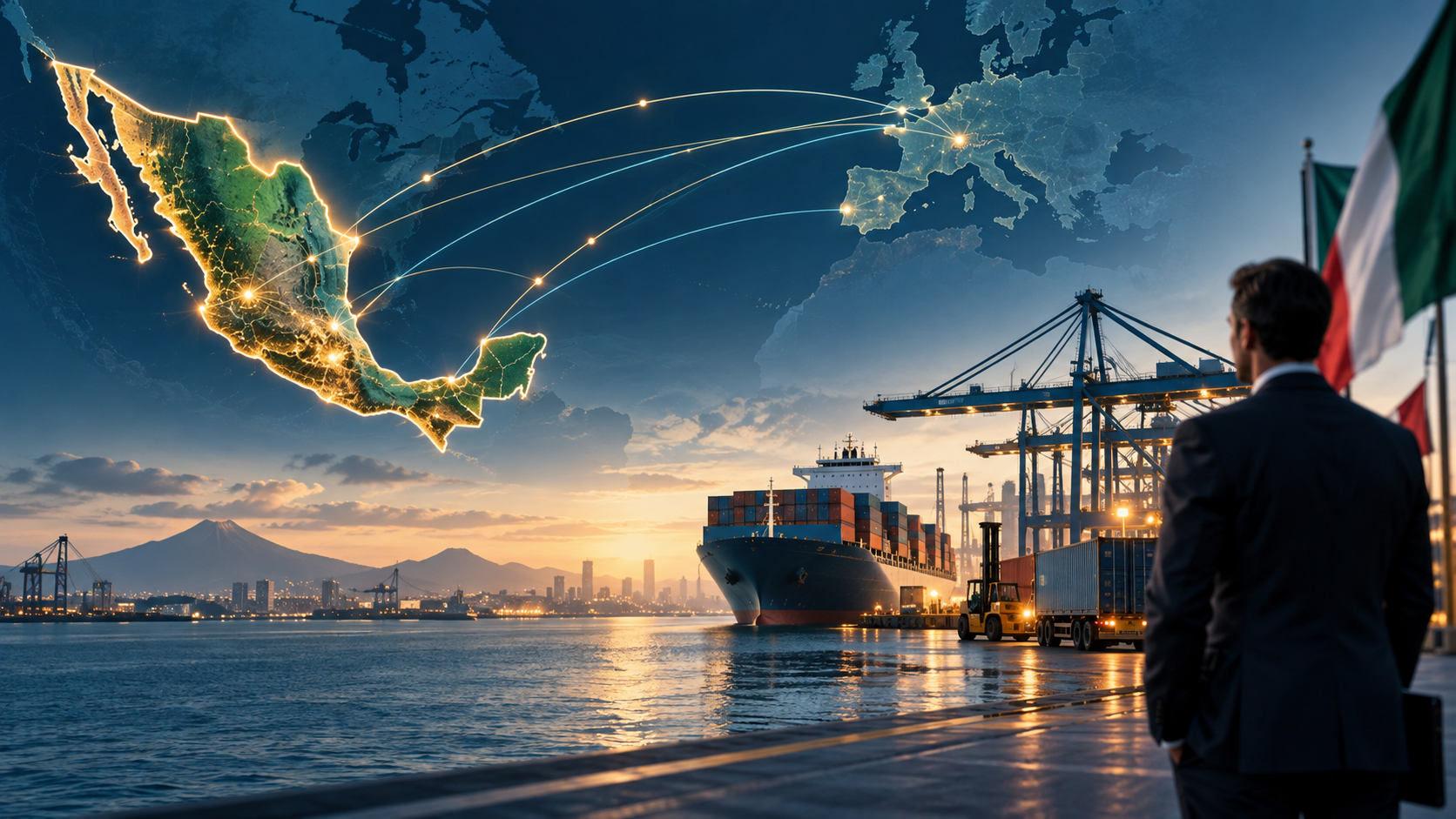
Nearshoring: relocation of certain production stages or supplies to countries geographically close to the destination market (e.g. Eastern Europe, the Balkans or the Mediterranean basin for Europe; Mexico for North America), drastically reducing transit times, emissions and the risks of logistical congestion.
Friendshoring (or Ally-shoring): selective shifting of production chains towards economies considered institutionally and geopolitically allied or reliable, reducing exposure to customs barriers, sanctions, or trade retaliation.
Dual Sourcing & Multi-Sourcing: abandonment of the single point of failure in favor of a two-channel strategy, pairing a low-cost long-haul provider with a second qualified partner close at hand.
Why does supply chain resilience become a competitive advantage?
The transformation of international trade is also changing the very concept of the supply chain. It is no longer enough to pursue efficiency and cost reduction. The value chain must also be agile, visible and capable of reacting quickly to shocks.
From the knowledge office of Bonfiglioli Consulting: Resilient Supply Chain and the Lean World Class® Methodology
Bonfiglioli Consulting tackles the issue of supply chain Starting right from the need to build an agile, responsive and sustainable value chain.The approach integrates Lean best practices and digital tools with the goal of improving end-to-end efficiency, reducing logistics costs and transit times, and at the same time increasing punctuality, resilience, and customer service level. The areas of intervention include:
digitization of the supply chain;
planning;
inbound logistics;
outbound distribution;
Sourcing and procurement;
sustainability of the value chain.
This setting takes on even greater significance in an international scenario in which efficiency must coexist with the ability to absorb unexpected and fluctuating demand.
Risk Management and Business Continuity: why they are becoming increasingly important?
A resilient supply chain also requires structured risk management. It is not possible to predict exactly when a geopolitical, energy or logistical crisis will occur. However, it is possible to understand it in advance:
which suppliers are the most critical;
where there are single points of failure;
which materials cannot be quickly replaced;
which markets expose the company the most;
what alternatives can be activated in case of emergency.
From the knowledge office of Bonfiglioli Consulting: Risk Management and Business Continuity
In its own in-depth study on the subject, Bonfiglioli Consulting identifies four main risk families in the supply chain:
strategic risks, related to aspects such as costs, quality and sustainability;
Operational risks, linked to processes, compliance and human capital;
financial risks, For example, related to the solvency of suppliers;
external risks, These include geopolitics, the environment, regulations, and technology.
The goal is to move from a predominantly reactive model to a culture of prevention, Based on vulnerability mapping, probability and impact assessment, and the development of contingency plans. In this perspective, the Risk Management It ceases to be merely a defensive instrument and becomes a lever to support operational continuity and competitiveness.
What are the implications for Italian companies that export?
Global phenomena such as the advent of AI, geopolitical tensions, and the energy transition can appear abstract scenarios for the daily lives of manufacturing SMEs. In reality, they have immediate impacts on orders, turnover, and margins. To preserve and develop their foreign market share, internationalized companies must act on six practical guidelines:
Diversifying markets, channels and customer portfolio: Focusing exports on one or two dominant markets (e.g., Germany or the United States alone) exposes the company to significant risks of cyclical slowdown or protectionism. Through targeted scouting and Temporary Export Management (TEM) services and foreign trade development, With this, SMEs can dominate alternative markets with strong traction (from South Asia such as India, to ASEAN and the Middle East).
Mapping critical dependencies (Single Point of Failure): It is urgent to identify the irreplaceable suppliers, the single-source semi-finished products, and the materials whose lack would cause the shutdown of production facilities, calculating the lead time required to find alternatives.
Qualifying alternative suppliers before the emergency: Technically validating a new supplier requires months between sampling, testing, and compliance audits. This activity should be managed proactively as a strategic asset for business continuity.
Integrate the Export strategy with the Sourcing strategy: Sales and procurement can no longer operate as independent silos. Foreign commercial planning must be calibrated according to the capabilities and the actual constraints of the supply chain.
Strengthening regulatory and geopolitical monitoring: Tariff evolutions, anti-dumping duties, sanctions and technical compliance standards can prevent access to a country from evening to morning. Constantly monitor entry requirements through market research and international advisory It allows to prevent customs delays.
Using advanced market intelligence and AI tools: The adoption of predictive platforms and operational dashboards allows for the detection of weak market signals before they turn into operational criticalities or losses in commercial margins.
Exporting or producing locally: how is the international strategy changing?
The combination of volatile logistical costs, ‘Buy Local’ regulatory requirements and customs barriers makes the boundary between commercial and industrial strategy increasingly blurred. For many high-value-added products, direct exports from Italy remain the winning formula. For other business segments, successfully dominating key markets (such as the United States or India) requires more established models of presence:
Exclusive distribution agreements with certified partners;
Opening of a dedicated local sales office or commercial branch;
Establishment of local warehouses to reduce delivery lead times to the final customer;
Joint ventures and strategic industrial alliances with local actors;
Opening of subsidiaries (subsidiaries) or local assembly and production facilities.
The choice of the ideal vehicle depends on a multifactor matrix that includes potential business volume, customs regulations, the local supply chain and tax incentives. In this context, Octagona assists companies throughout the entire decision-making process, from corporate planning to implementation. establishment of branches and companies abroad and the management of Local operational support (BPO, logistics and recruiting).
A foreign country should not be considered solely as a landing market for the finished product, but as a strategic hub to serve an entire continental region (e.g., India as a platform for Southeast Asia and the Middle East; the United States as the center of gravity for the USMCA area).
How to prepare for the global trade of 2027?
2026 shows that globalization is not over. However, it is becoming more complex. To prepare for the future scenario, every company can start with some fundamental questions:
From which countries do we depend most?
Which suppliers or components represent our main vulnerabilities?
Which new sectors are growing thanks to technological investments?
Is our production and commercial setup still efficient?
Do we have alternatives already available in case of disruption of the supply chain?
Do we have sufficient data and tools to anticipate changes?
The ability to answer these questions can transform uncertainty from a purely defensive element into a factor to be integrated into the international strategy.
Conclusions: building flexible and data-driven international competitiveness
The global trade of 2026 is characterized by seemingly opposing forces.Artificial Intelligence fuels new investments and new industries. Energy is once again directly influencing costs and competitiveness. Geopolitics increases pressure on supply chains and drives governments and companies to reassess certain dependencies. At the same time, international trade continues to grow.The point is therefore not to ask whether globalization is simply coming to an end. It is more useful to understand How the geography of opportunities and risks is changing. For Italian companies, international competitiveness will increasingly depend on the ability to combine:
presence in the markets;
diversification;
resilience of the supply chain;
use of data;
technology;
speed of decision-making.
In this scenario, the advantage will not necessarily come from being present in the largest possible number of countries, but from the ability to build an international system that is flexible, monitorable and able to react quickly when demand, costs, regulations and trade routes change.
Frequently Asked Questions about World Trade 2026
What are the factors driving the growth of global trade in 2026?
Despite geopolitical fragmentation, global trade in 2026 is driven by demand for the physical infrastructure of Artificial Intelligence (semiconductors +25%, critical minerals +38%, data centers), the energy transition (batteries +15%) and the increase in the value of trade in services (+10.5%). A significant share of monetary growth is linked to the increase in logistics and transport costs.
How does Artificial Intelligence revolutionize supply chain management?
Artificial Intelligence transforms the supply chain from a reactive model to a predictive model. Through Machine Learning tools such as Supplier Dynamic Insight and StockSense AI from Bonfiglioli Consulting, companies can predict fluctuations in demand (predictive forecasting), monitor suppliers’ default risks, optimize inventory levels, and simulate scenarios involving tariffs or logistical crises.
What is the fundamental difference between nearshoring, friendshoring and reshoring?
Reshoring is the total repatriation of production to the company’s home country. Nearshoring is the relocation of production or supply activities to geographically close countries to the consumption markets (e.g., Eastern Europe or Mexico) to reduce logistical lead times. Friendshoring (or ally-shoring) consists of relocating the supply chain to geopolitically similar or allied countries to eliminate the risks of sanctions or trade blocks.
What concrete actions must Italian exporting SMEs take in 2026?
Companies must implement six guidelines: diversify export markets by relying on expert figures such as Octagona’s Temporary Export Managers (TEMs); map out critical, irreplaceable suppliers; qualify secondary suppliers (dual sourcing); align commercial planning with the capabilities of the supply chain; constantly monitor tariffs and customs regulations; and invest in predictive data intelligence to mitigate energy and transport price hikes.
SHARE ARTICLESassy Social Share
If you want to learn more about the content of this article





 Italian
  English