Suez Canal blockade, what repercussions for exports?
In summary
According to The Economist Intelligence Unit, 30% of container traffic and 12% of world trade pass through the Suez Canal.
Gli attacchi degli Houthi hanno spinto molte compagnie verso il Capo di Buona Speranza, con circa 1500 dollari in più a container e fino a 20 giorni di ritardo.
Le merci italiane che transitano dal mar Rosso valgono quasi il 9% dell’export, oltre 53 miliardi di euro, secondo Confartigianato.
Il settore ortofrutticolo è il più esposto: il rincaro può superare 10 centesimi di euro al chilo e la shelf-life di mele, kiwi e agrumi peggiora.
Nel breve periodo conviene consolidare i mercati attuali ed esplorare Balcani, Nordics e Stati Uniti; nel lungo periodo presidiare l’Asia, India in testa, con logica local for local.
The beginning of 2024 for world exports was marked by the recent blockade of the Suez Canal.
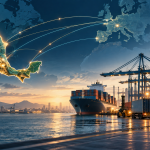
The latter represents an essential trade route for the passage of goods globally; in fact, according to a report by The Economist Intelligence Unit, 30% of container traffic and 12% of world trade passes through this stretch of sea. Repeated attacks by the Yemeni Houthi group on cargo ships transiting the strait have resulted in the closure of the choke point, and consequently the need to find new routes for goods.
As early as last December, the Kile trade indicator showed a 2% decline in exports from the EU as a result of this geopolitical crisis.
What is the impact on Italian exports and more importantly, how to safeguard exports from our country?
Suez Canal blockade, the first effects
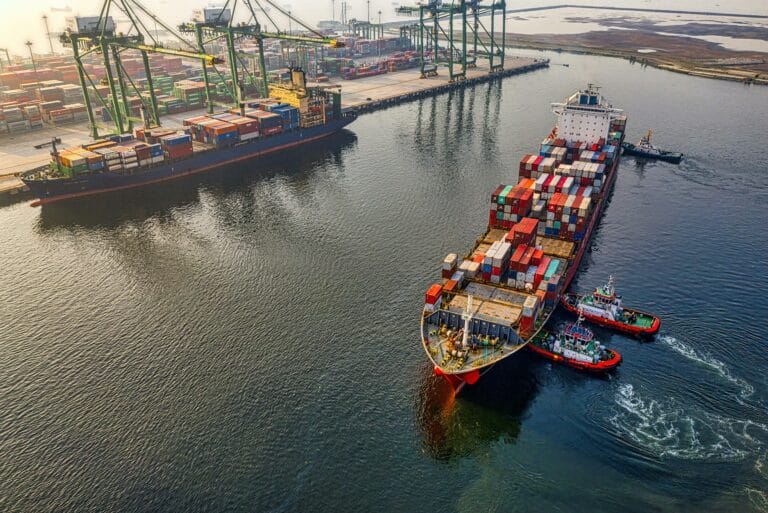
To cope with the emergency in the Suez Canal, several international companies have changed their trade routes, opting to pass through the Cape of Good Hope in South Africa. This is a choice that implies higher transportation costs (a surcharge of around $1,500 per container) and major delays, which can be as long as 20 days.
So far, Italian businesses have experienced limited repercussions. The need, however, is to develop strategies as soon as possible that can cope with the emergency. Goods transiting the Red Sea from Italy cover almost 9% of our exports, as reported by Confartigianato. In other words, this is a volume of business that exceeds 53 billion euros and must be safeguarded.
The incidence is high for both imports of crude oil and metal products (about 30% of total purchases from abroad), as well as’’oil and liquefied natural gas supply from “alternative sources” after the farewell to Russian methane.
The sector most alarmed is the fruit and vegetable sector, as the lengthening of the route increases not only transportation costs but also the price of the commodity, which can be increased by more than 10 cents/kg. In addition, there is also an important impact on the shelf-life of fresh produce, especially apples, kiwis, and citrus fruits.
In this context, Italian companies are considering actions that can address the current situation and safeguard the’export.
Protecting Italian exports from the Suez crisis, what measures?
It seems, therefore, clear how critical the situation has become from the perspective of the economy. Many companies are suffering the repercussions of the blockade and must take action to cope with the inevitable slowdown in trade. Therefore, it is possible to move actively by taking some measures that could be an ideal alternative solution. But what are these measures? Two strategies can be undertaken:
Short-term approach
Consolidating the presence of the company in markets where it already has a presence. We refer to markets such as Europe, convenient both because of geographic proximity and few barriers to entry.
However, since the European market is less viable than other markets, in parallel it is recommended to search for new markets outlets that are easy to reach and not so difficult to penetrate (e.g., Balkans and Nordics).
In the wake of seeking new markets, a good alternative may be the United States, which still offers many opportunities in various sectors.
Long-term approach
From a strategic point of view, also in view of the opportunity provided, it is appropriate to presiding over the Asian market with a logic of local for local aiming to create a direct presence supported by a local network (service, customers, suppliers, etc.). In the area, India is currently the most promising country for this type of investment.
Finally, whether you want to enter new markets or consolidate your presence in areas you already know, to make sure that problems in the Suez Canal do not unduly impact your business, you need to review its supply chain. In order to be able to avoid excessive slowdowns in production and on shelf-life (as in the case of fresh produce), the supply chain must not suffer hiccups of any kind. It may, therefore, be the case to target new suppliers not involved in critical geographic areas and carry out the right qualification process.
The situation in the Suez Canal is a priority on the international political agenda. The goal is to ensure safe transits through the Suez Canal as soon as possible, thereby avoiding other negative effects on international trade.
While waiting for institutions to take action on this situation in the short term, every business must take the reins of its trade into its own hands and decide which strategies both short- and long-term to adopt. Of course, these are very difficult choices for which a variety of skills are required: knowledge of internationalization strategies and markets, local presence, and experience gained in the field are key factors for the success of such strategies.
If you would like to discuss with our experts, please feel free to contact us.
Frequently Asked Questions
Perché il blocco del canale di Suez è così rilevante per il commercio mondiale e l’export?
The Suez Canal is an essential route for global goods: according to a report by The Economist Intelligence Unit, it handles 30% of global container traffic and 12% of world trade. The Houthi attacks on cargo ships have led to the closure of the choke point, making alternative routes necessary.
How much more do they cost and how much time do the ships that sail through Suez from Cape Good Hope lose?
The passage from Cape of Good Hope, in South Africa, involves an increase of about 1500 dollars per container and delays that can reach 20 days. Many international companies have chosen this route to avoid the attacks, accepting higher transport costs and much longer delivery times.
What impact has the Suez Canal crisis had on Italian exports?
Finora le imprese italiane hanno registrato ripercussioni contenute, ma l’esposizione è rilevante. Secondo Confartigianato, le merci italiane che transitano per il mar Rosso coprono quasi il 9% dell’export, cioè oltre 53 miliardi di euro. Per questo servono strategie rapide. Già a dicembre il Kile trade indicator segnalava un calo del 2% dell’export UE.
Quali settori dell’export italiano rischiano di più con il blocco di Suez e perché?
The fruit and vegetable sector is the most alarmed: the longer route increases transport costs and the price of the goods, with price increases that can exceed 10 cents per kilo. The shelf life of fresh products, especially apples, kiwis and citrus fruits, also worsens. The imports of crude oil and metal products also weigh heavily.
Quali strategie di breve periodo può adottare un’azienda italiana per proteggere l’export dalla crisi di Suez?
Nel breve periodo conviene consolidare la presenza nei mercati già presidiati, come quello europeo, vicino e con poche barriere all’ingresso. In parallelo si possono cercare sbocchi facili da raggiungere e da penetrare, come Balcani e Nordics, oppure puntare sugli Stati Uniti, che offrono opportunità in molti settori.
Che strategia di lungo periodo serve per l’export verso l’Asia e come va rivista la supply chain?
Nel lungo periodo si consiglia di presidiare il mercato asiatico con logica local for local, creando una presenza diretta supportata da una rete locale di service, clienti e fornitori. L’India è il Paese più promettente. Va rivista anche la supply chain, valutando e qualificando nuovi fornitori non coinvolti in aree geografiche critiche.
SHARE ARTICLESassy Social Share
If you want to learn more about the content of this article





 Italian
 English