Exporting agricultural machinery in 2026: markets, technologies, and strategies for Made in Italy
In summary
In 2025, Italian production of agricultural machinery reached 14.3 billion euros, with exports amounting to approximately 6.7 billion and a positive trade balance of approximately 4.6 billion.
FederUnacoma stima per il 2026-2029 una crescita degli scambi mondiali dell’1,9% annuo, guidata da Africa subsahariana (+4,8%), Asia (+3,8%) e America Latina (+2,9%).
L’India ha venduto circa 1,1 milioni di trattori nel 2025 (+20%), ma la pressione sui prezzi spinge i produttori italiani verso tecnologie specialistiche ad alto valore aggiunto.
Le nuove tariffe hanno causato nel 2025 una perdita stimata di oltre 230 milioni di euro per l’industria italiana negli Stati Uniti, rendendo necessaria la diversificazione dei mercati.
La marcatura CE non basta fuori dall’Unione Europea: servono verifiche su omologazioni locali, e assistenza e ricambi sono decisivi nella scelta del distributore.
Index
Italian agricultural machinery: a sector structurally oriented towards exports
Agricultural machinery represents one of the sectors in which Made in Italy expresses a particularly effective combination of engineering expertise, customization capabilities, and production specialization. Tractors, operating machines, equipment, components, irrigation systems, and digital solutions constitute an articulated industrial ecosystem, composed of large groups as well as numerous highly specialized SMEs.
Industry figures in 2025
The most recent data confirm the strategic importance of international markets.
The total value of Italian production in the sector reached 14.3 billion euros (+2.1% compared to the previous year)
components grew by 7.6%, reaching 3.5 billion euros
Production of spare parts and machine parts increased by 8.6%, to approximately 1.3 billion euros
total exports of agricultural machinery and equipment: approximately 6.7 billion euros (-1,7%)
operating machines and equipment: approximately 4.4 billion euros
tractors: 1.4 billion euros
trade balance of the sector: positive by about 4.6 billion euros
These data show that internationalization is not an optional feature for Italian manufacturers, but a structural component of their business model.
The global market is changing: a new geography of agricultural mechanization
The main transformation characterizing the sector in 2026 concerns the geography of demand.
In recent years, many mature markets have experienced a slowdown driven by reduced agricultural profitability, rising financing costs, geopolitical tensions, and new trade policies. In 2025, tractor sales experienced significant declines in the United States, Germany, France, and the United Kingdom. At the same time, other markets are showing much higher growth rates.
This evolution does not mean that the global demand for agricultural machinery is decreasing in a structural way. On the contrary, the needs related to increasing food production, the shortage of labor, the management of natural resources, and the need to improve agricultural yields continue to support mechanization.
The FederUnacoma 2026-2029 forecasts
FederUnacoma estimates that international trade in agricultural machinery may return to growth during the period 2026-2029 at an average rate of 1.9% per year, reaching about 92.5 billion euros at the end of the period.
Sub-Saharan Africa: +4,8%
Asia: +3,8%
Latin America: +2,9%
For Italian companies, it therefore becomes essential to move beyond a strategy focused exclusively on Western Europe and North America and to analyze the new centers of global demand with greater attention.
Market
Key fact
2026-2029 Outlook
India
Approximately 1.1 million tractors sold in 2025 (+20%)
already the world's largest market, strong competitive pressure on prices
Sub-Saharan Africa
mechanization still very heterogeneous
+4.8% annually, the highest estimate among the regions mentioned
Asia (excluding India)
fast-growing markets
+3.81 TP3T per year
Latin America
Brazil, Argentina, Chile: large agricultural areas
+2.91 TP3T per year
Turkey
Italian-Turkish trade approaching 500 million euros in 2025
nearby market, solid agricultural and manufacturing base
United States
The estimated loss for the Italian industry will be over 230 million euros in 2025 due to new tariffs
A mature market, but more complex
Western Europe
France, Germany, Spain, United Kingdom: essential markets for advanced technologies
mature market, high competition
India: the largest market in the world in terms of number of tractors
Among the markets that deserve greater attention, India occupies a special position.In 2025 the country reached about 1.1 million tractors sold, The record high, with growth exceeding 20% compared to the previous year. The first four months of 2026 further confirmed the trend: of the approximately 512 thousand tractors sold in the main markets monitored, approximately 375 thousand were absorbed by India.
However, interpreting these numbers exclusively as a great commercial opportunity would be reductive. The Indian market presents a strong local industry and significant competitive pressure on prices. For Italian producers, the most interesting opportunities therefore tend to focus on specialized technologies, high-value-added equipment, and applications capable of improving productivity, precision, and efficiency.
Machinery for specialty crops, soil tillage, irrigation, harvesting, viticulture, horticulture, post-harvest, and precision agriculture can find significant opportunities if supported by an adequate commercial strategy.
How to segment the Indian market
In a market the size of India, moreover, it is not enough to identify the country as a target. It is necessary to analyze the federated states, the predominant crops, the average size of agricultural enterprises, the level of mechanization, and the organization of distribution. In other words, geographic segmentation becomes as important as that of the product itself.
Africa: mechanization and increased productivity
The African continent also represents one of the areas with the greatest potential in the medium to long term.
In many African countries, demographic growth and the need to increase food production are making the modernization of agriculture an economic and political priority. However, the level of mechanization remains extremely heterogeneous: alongside already relatively structured agriculture, there are vast areas where activities continue to be characterized by a reduced technological intensity.
In 2026 FederUnacoma strengthened its activities to promote Italian technology in markets such as Morocco, Kenya and Ethiopia, emphasizing precisely the need to introduce technologies capable of increasing agricultural productivity.
What African markets are really looking for
The opportunity for Italian producers does not necessarily consist in exporting the same machines used in European markets. In many African contexts, robustness, ease of maintenance, availability of spare parts, adaptability to climatic conditions, and economic sustainability of the investment are decisive factors.
This aspect highlights one of the fundamental principles of internationalization in the agricultural machinery sector: The most technologically advanced product is not always the most suitable product for the market.. The ability to calibrate technology, price, and the level of complexity in relation to the actual needs of users often represents the determining factor for success.
Latin America and Turkey: markets to be evaluated with a selective strategy
Latin America also presents interesting prospects. Brazil, Argentina, Chile and other markets in the region have large agricultural areas, important agro-food sectors and significant demand for technologies to improve efficiency and productivity.
The forecasts cited by FederUnacoma indicate for the Latin American region an increase in agricultural machinery trade of close to 3% per year in the period 2026-2029.However, the competition is very intense and includes both large international manufacturers and local producers. For Italian companies, it therefore becomes particularly important to identify niches in which their expertise can generate a real competitive advantage.
Turkey, on the other hand, represents a geographically closer market characterized by a significant agricultural and manufacturing base. In 2025, Italian-Turkish trade in the agricultural machinery sector reached almost €1 billion. 500 million euros, With Italian exports amounting to around 230 million euros, Italy has established itself as one of the main suppliers to the Turkish market.In this case too, however, price, local production and macroeconomic conditions make it necessary to carefully assess the positioning.
The United States and Europe remain strategic, but complexity increases
The growth of emerging markets does not mean that Europe and the United States have lost relevance.France, Germany, Spain, the United Kingdom and North America remain key markets for Italian agricultural machinery, especially for the most advanced technologies. However, these are mature areas where competition is particularly intense and demand depends to a significant extent on the profitability of agricultural enterprises, available incentives and credit conditions.
The United States is the clearest example of the change that has taken place compared to what was reported in our previous in-depth article on the matter.’ agricultural machinery export.In 2023 and 2024, they represented the primary destination market for Italian agricultural technologies; in 2025, however, the new pricing policies they contributed to a loss for the Italian industry estimated by FederUnacoma at over 230 million euros.
This scenario shows how important it is to diversify the portfolio geographically. Dependence on one or two countries excessively exposes the company to regulatory, tariff, or geopolitical changes that can rapidly alter the conditions of competitiveness.
Precision farming, robotics and artificial intelligence are changing demand
The second major transformation of the sector concerns technology.The future of agricultural mechanization is no longer simply about more powerful or productive machines. Value is progressively shifting towards the ability to collect data, automate processes, and more efficiently use water, fertilizers, pesticides, and energy.
Among the technologies that are transforming tractors and equipment into true technological platforms:
sensors and GPS
automatic driving systems
telemetry and ISOBUS connectivity
computer vision
artificial intelligence algorithms
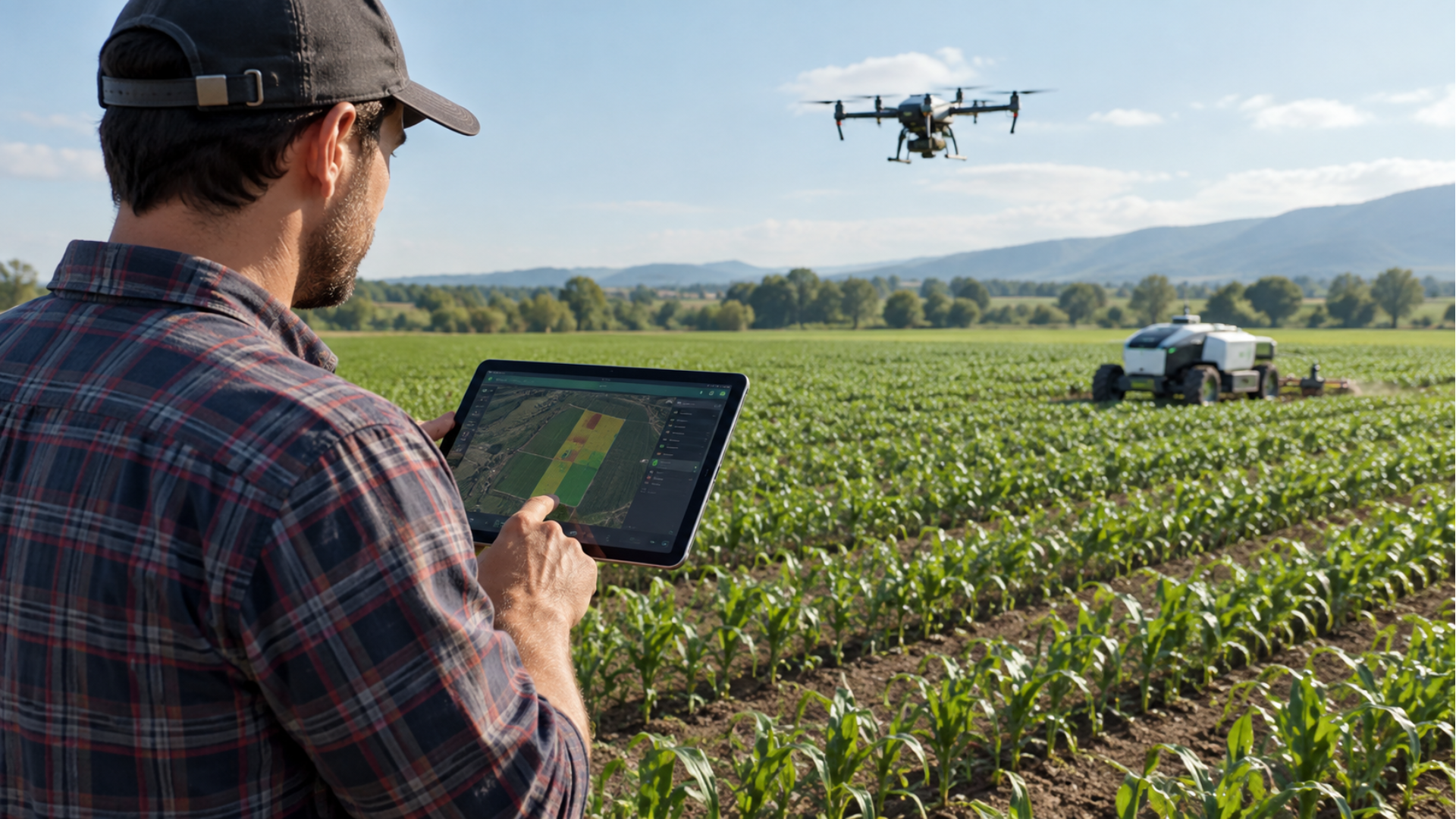
In specialized crops, this evolution is particularly evident. In 2026, FederUnacoma presented applications that include autonomous robots, GPS and LiDAR systems, agricultural drones, sensors for soil analysis, and machines capable of performing targeted treatments.
The goal is twofold: to increase productivity and reduce the inputs used. A machine capable of distributing treatment only where necessary can reduce costs and environmental impact; similarly, autonomous or semi-autonomous systems can help address the growing difficulty in finding skilled agricultural labor.
For the Italian industry, this trend represents a great opportunity. The national specialization in machines for vineyards, orchards, horticulture, and high-value-added crops allows companies to compete not necessarily through large volumes, but through the quality of the technological solution.
Exporting agricultural machinery also means guaranteeing assistance
In the capital goods sector, the commercial process does not end with the delivery of the machine.
A tractor, a harvester or agricultural equipment represents a productive investment and a possible machine downtime can lead to immediate financial losses for the user. The availability of spare parts and technical assistance therefore becomes an integral part of the sales proposal.Before entering a new market, it is necessary to ask who will install or commission the machine, who will train the user, where the main spare parts will be available, and what turnaround times can be guaranteed.This element also directly influences the choice of distributor. An importer equipped solely with commercial capabilities may be less effective than a partner with a technical network, trained personnel, and spare parts warehouses in the territory.
For Italian companies, therefore, the selection of the partner should not be based solely on the number of customers present in their database. It is necessary to verify:
geographic coverage
product portfolio
potential conflicts with competing brands
technical skills
financial soundness
real capacity for investment in the development of the brand
Regulations, homologations and certifications: what to check before exporting
Agricultural machinery presents a regulatory complexity greater than that of many other industrial goods because it can simultaneously involve requirements related to machine safety, road traffic, emissions, engines, electrical components, and telecommunications systems.
Within the European Union, the EU Regulation No. 167/2013 It regulates the homologation and supervision of the market for agricultural and forestry vehicles, including tractors of categories T and C, trailers of category R and certain interchangeable towed equipment.
At the same time, companies must prepare for the new framework introduced by EU Regulation 2023/1230 on machinery, scheduled to replace the previous Machinery Directive during 2027.
Exporting outside the European Union: what changes
When exporting outside the European Union, However, the CE marking should not be interpreted automatically as a universal passport. Each market may have its own approval procedures, technical standards, emission limits, documentation requirements, markings, rules for the importer, and provisions regarding the manuals and the language of the documentation.
Before marketing, it is therefore advisable to verify:
the customs classification of the product
the applicable standards
any required tests
the registration procedures
The responsibilities of the local importer
How to build an effective strategy for exporting agricultural machinery
The new geography of the sector makes the approach based on simply finding a generic distributor increasingly ineffective.
An internationalization project should start from understanding where there is actually a demand compatible with the machine produced by the company. This means analyzing not only the overall value of the market, but also the predominant crops, the size of agricultural enterprises, the level of mechanization, the distribution structure, the competitors present, and the investment capacity of the end users.
Once the most interesting markets have been identified, it is necessary to build a map of local operators and distinguish between importers, dealers, specialized distributors, cooperatives, large agricultural companies, wholesalers, and institutional operators.
Which entry model to choose
The next phase involves defining the entry model. In some countries, an exclusive distributor may be the most effective solution; in others, working with multiple regional dealers may be preferable. In more strategic and mature markets, however, it may be appropriate to consider a local sales structure, dedicated personnel, or a direct corporate presence.
The role of trade fairs: EIMA International 2026
Trade fairs also continue to play an important role. The same EIMA International 2026, The event, scheduled in Bologna from November 10 to 14, represents a privileged platform for meeting operators from the main international markets and observing the technological evolution of the sector. However, participation in the trade fair produces results only when it is integrated into a structured commercial itinerary, with scouting activities before the event and systematic follow-up thereafter.
Conclusions: Exporting agricultural machinery in 2026 requires a more selective strategy
The global agricultural machinery market is undergoing a phase of profound transformation. The slowdown in some traditional markets is accompanied by the expansion of demand in India, Asia, Africa, and Latin America, while digitalization, robotics, and artificial intelligence are redefining the very nature of the technologies required by farmers.
For Italian companies, the opportunities remain significant, but they require a more selective approach than in the past.Identifying the right market, understanding the specificities of local agricultural sectors, defining the product positioning, verifying regulatory compliance, and building an appropriate distribution and support network are essential steps to turn the market potential into concrete business results.
Along this path, Octagona supports Italian companies through:
Which are the most promising markets for exporting Italian agricultural machinery in 2026?
The markets with the fastest growth are India, Sub-Saharan Africa, Asia and Latin America. FederUnacoma forecasts an annual growth of +4.8% for Sub-Saharan Africa, +3.8% for Asia and +2.9% for Latin America in 2026-2029. Western Europe and North America remain strategic for advanced technologies, but they are mature markets and very competitive.
How large is the Indian tractor market and is it profitable to export agricultural machinery to India?
L’India è il più grande mercato mondiale per numero di trattori: nel 2025 ne ha venduti circa 1,1 milioni, con una crescita superiore al 20%. Esiste però una forte industria locale e una pressione sui prezzi. Per le imprese italiane le opportunità maggiori riguardano colture specializzate, irrigazione, raccolta, viticoltura, post-raccolta e agricoltura di precisione, con segmentazione per Stato federato.
What impact have the tariffs had on Italian exports of agricultural machinery to the United States?
Le nuove politiche tariffarie hanno contribuito nel 2025 a una perdita per l’industria italiana stimata da FederUnacoma in oltre 230 milioni di euro. Nel 2023 e 2024 gli Stati Uniti erano il primo mercato di destinazione delle tecnologie agricole italiane. Per questo le imprese dovrebbero diversificare i mercati ed evitare di dipendere da uno o due Paesi.
Which agricultural machinery technologies have the greatest growth prospects?
Crescono agricoltura di precisione, sensori e GPS, guida automatica, telemetria e connettività ISOBUS, computer vision, robotica e intelligenza artificiale. Il valore si sposta verso raccolta dati, automazione e uso efficiente di acqua, fertilizzanti, prodotti fitosanitari ed energia. L’Italia può competere con soluzioni di qualità per vigneti, frutteti e orticoltura, più che con grandi volumi.
La marcatura CE è sufficiente per esportare una macchina agricola fuori dall’Unione Europea?
No, la marcatura CE non è un passaporto universale fuori dall’Unione Europea. Ogni Paese può richiedere propri standard, omologazioni, limiti alle emissioni, test, registrazioni, regole per l’importatore e documentazione in lingua locale. Prima di vendere vanno verificati classificazione doganale, standard applicabili, test richiesti, procedure di registrazione e responsabilità dell’importatore locale.
Come scegliere il distributore locale per vendere macchine agricole all’estero?
Il distributore va scelto per capacità tecnica oltre che commerciale, perché deve garantire installazione, formazione, ricambi e assistenza: un fermo macchina causa perdite immediate all’utilizzatore. Vanno verificati copertura geografica, portafoglio prodotti, conflitti con marchi concorrenti, competenze tecniche, solidità finanziaria e capacità di investire nello sviluppo del brand.
SHARE ARTICLESassy Social Share
If you want to learn more about the content of this article












 Italian
 English